What is fusible interfacing?
If you want to reinforce your garments during their construction, several types of interfacing are available (see our dedicated guide on this subject). However, one of the most popular remains fusible interfacing. What is it and how do you apply it? Read on to discover the inner workings of this essential reinforcement for your creations.
- Definition
- The textile bases of fusible interfacing
- Types of coating and meshing
- Application methodologies for fusible interfacing
- FAQ
Definition of fusible interfacing
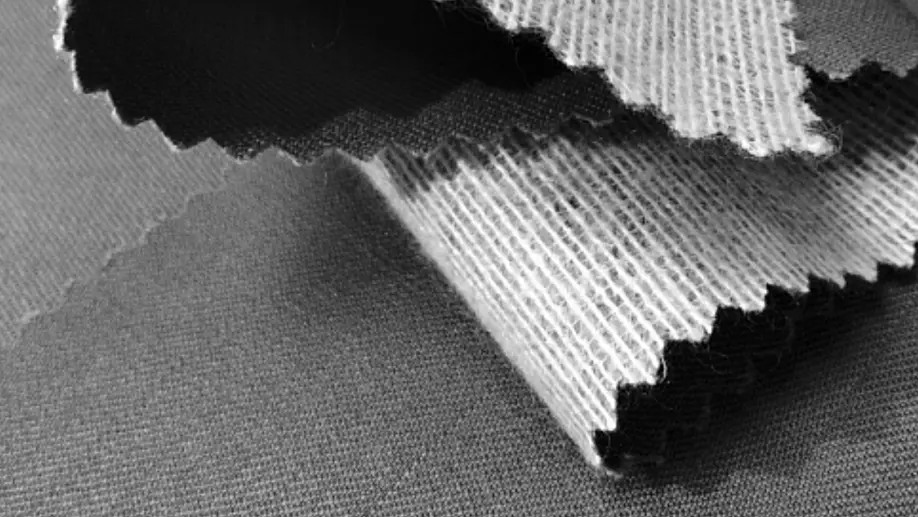
Fusible interfacing is a technical textile layer invisibly inserted between the outer fabric and the lining. Its unique feature lies in its ability to be fixed by heat (using an iron or a press). It consists of two inseparable elements:
- A textile base: which can be woven, knitted, or non-woven.
- A coating: a layer of glue (in the form of dots or resin) that melts with heat to bond the interfacing to the fabric.
Its major role: to provide structure, reinforcement, or support without altering the visual appearance of the main fabric.
Why use fusible interfacing?
Interfacing is often called "the soul of the garment." It is essential to:
- Structure: give shape and an impeccable hold.
- Beautify: reduce unsightly wrinkles and improve the final look of the garment.
- Stabilize: facilitate handling during sewing (prevents the fabric from deforming).
- Sustain: reinforce tension zones to extend the lifespan of the piece.
A differentiated application of fusible interfacing: men vs. women
Interfacing adapts to the morphology and the desired style:
- For men: stature is sought after. Interfacing helps achieve a straight, clean, and square look (especially on the shoulders and chest).
- For women: shape and curves are sought after. Interfacing supports the form and volume while respecting feminine fluidity and curves.
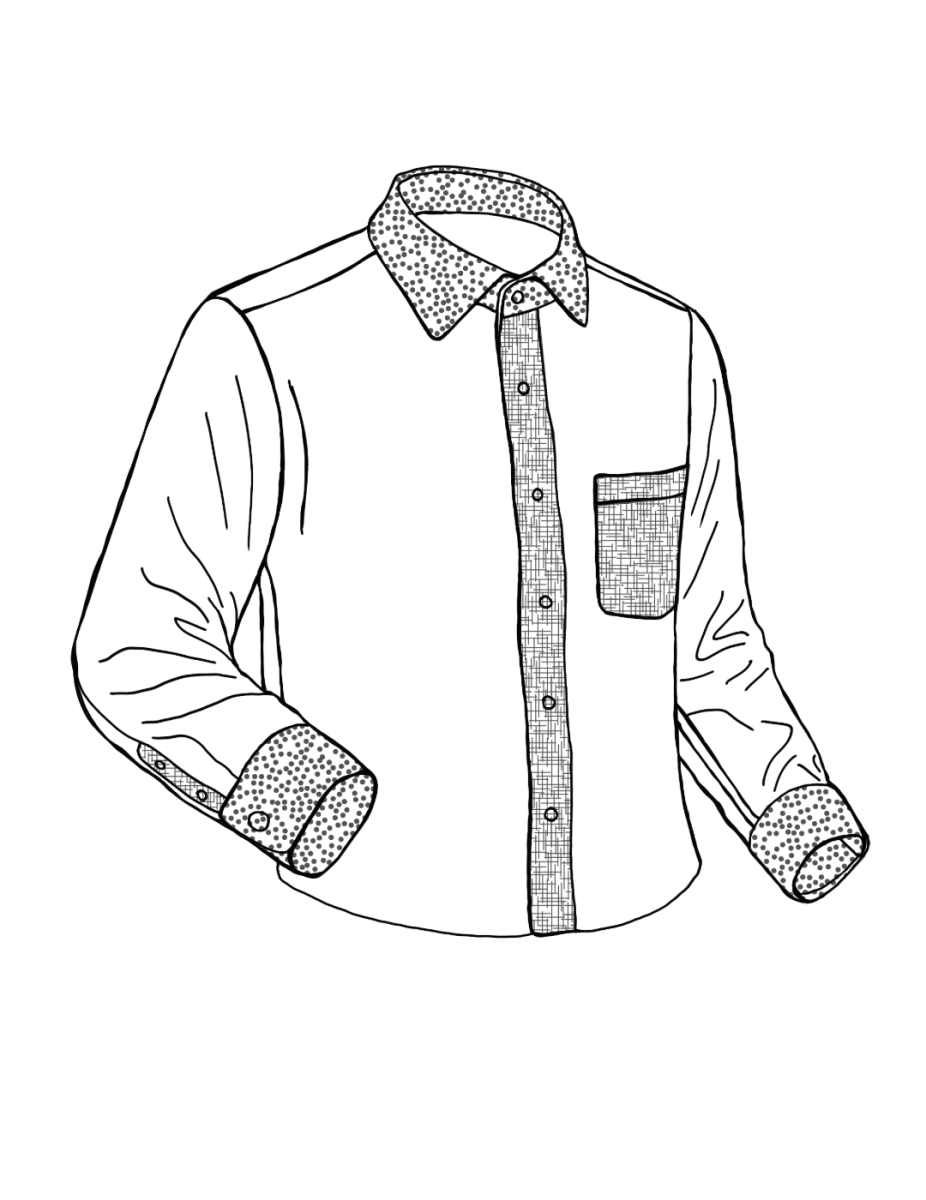
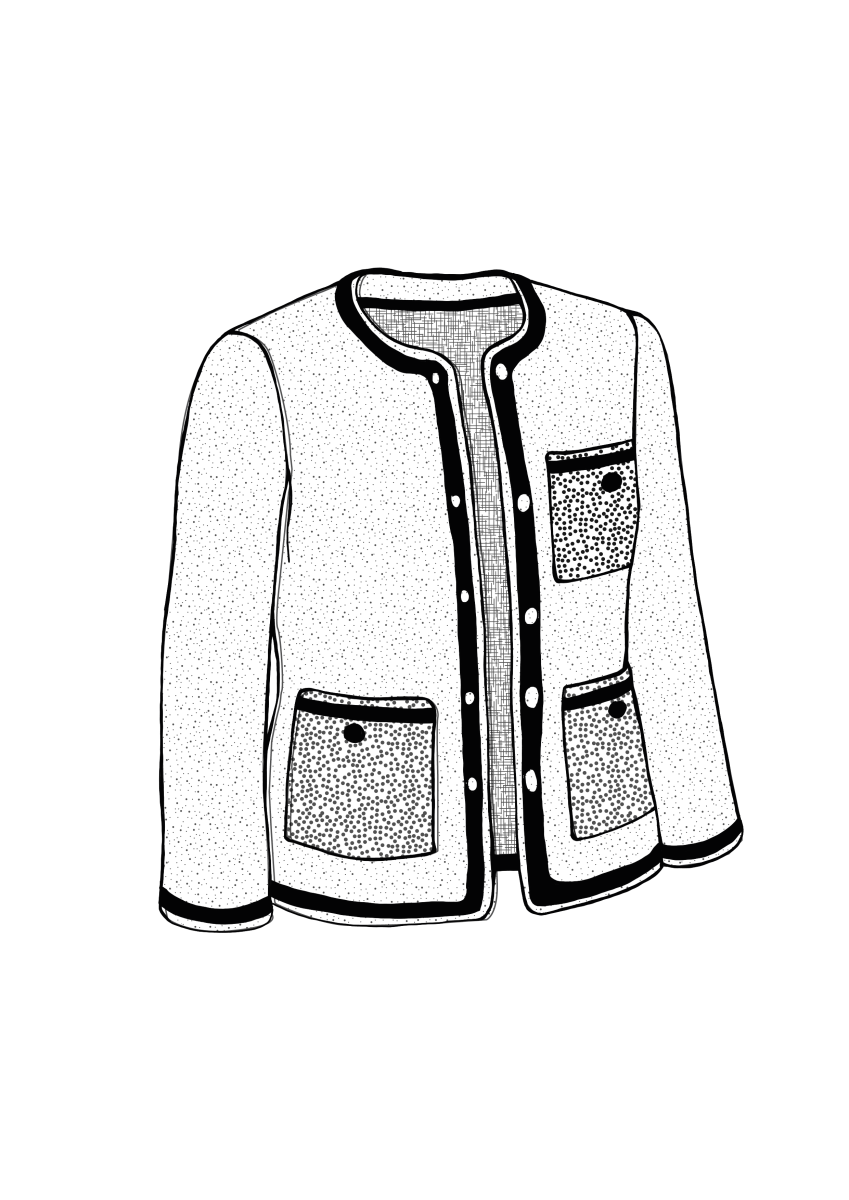
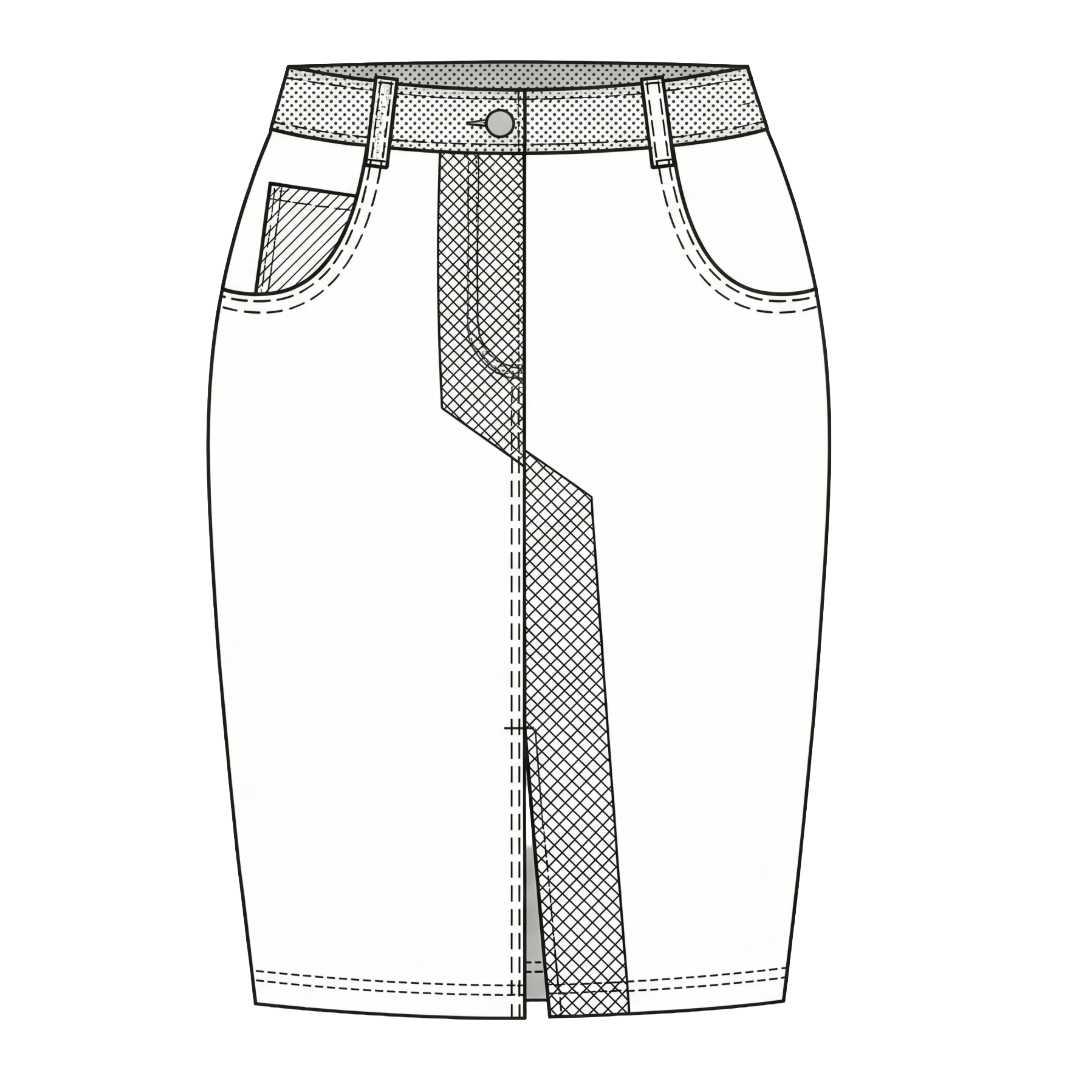
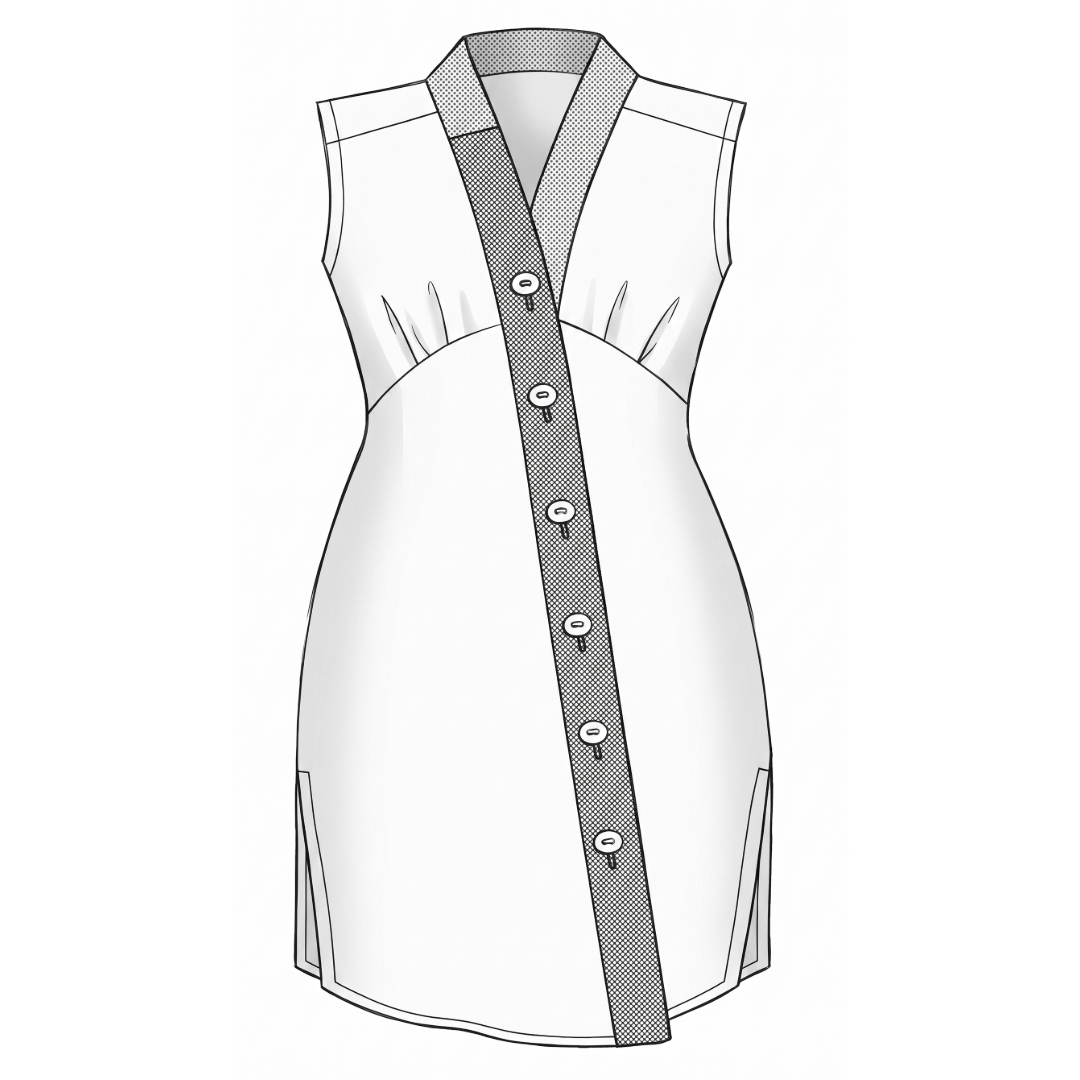
Common application zones for fusible interfacing
Fusible interfacing is not applied to the entire garment, but rather to strategic areas.
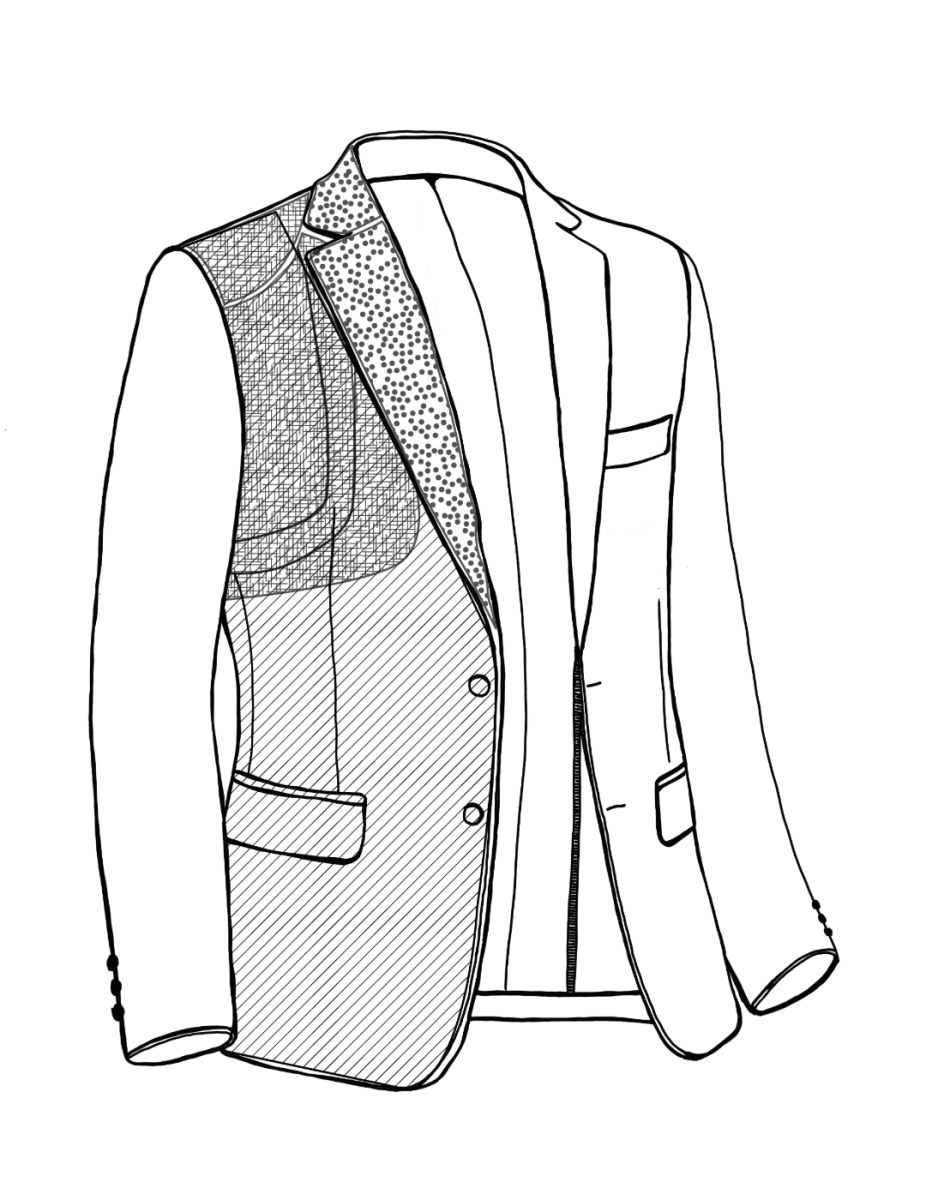
Lapel, pocket flap, lower jacket front, piping, armhole, sleeve head roll, collar, etc.
The textile bases of fusible interfacing
The choice of an interfacing depends primarily on its textile base, the manufacturing of which determines the drape and technical nature of the final garment. There are three main families.
Non-woven interfacing
The ultimate industrial solution, it is formed by the direct assembly of fibers bonded chemically or thermally. It is the most economical option, ideal for mass production, although it offers little elasticity and is quite fragile.
Woven interfacing
Built on looms with warp and weft yarns, it ensures superior support. Depending on the chosen weave (Plain 1/1 for strength, 2/2 for texture, or 3/1 for softness), it provides essential stability to structured pieces like suit jackets.
Weft-inserted knitted interfacing
Knitting is based on the interlacing of loops and stands out for its great stretch and flexibility. This high-end base is preferred to accompany body movements without deforming the silhouette.
However, a distinction is made between circular knit (low-end because it is easily deformed) and weft-inserted knit (high-end). At Chargeurs PCC, we specialize in high-end knitting, which we offer in specific structures: warp-knit (chaînette) for its textured volume, weft insertion for its flexibility, and Top Satin, a dense and luxurious hybrid structure dedicated to high-end tailoring.
In summary: the choice of base is a trade-off between budget, level of rigidity, and the need for elasticity. While non-woven focuses on economic efficiency, woven and knitted offer technical precision adapted to the requirements of luxury ready-to-wear and haute couture.
Types of coating and meshing
What is meshing?
Meshing corresponds to the number of coating dots (glue) on a given textile surface. There are several types of engraving, determining different meshing calculations:
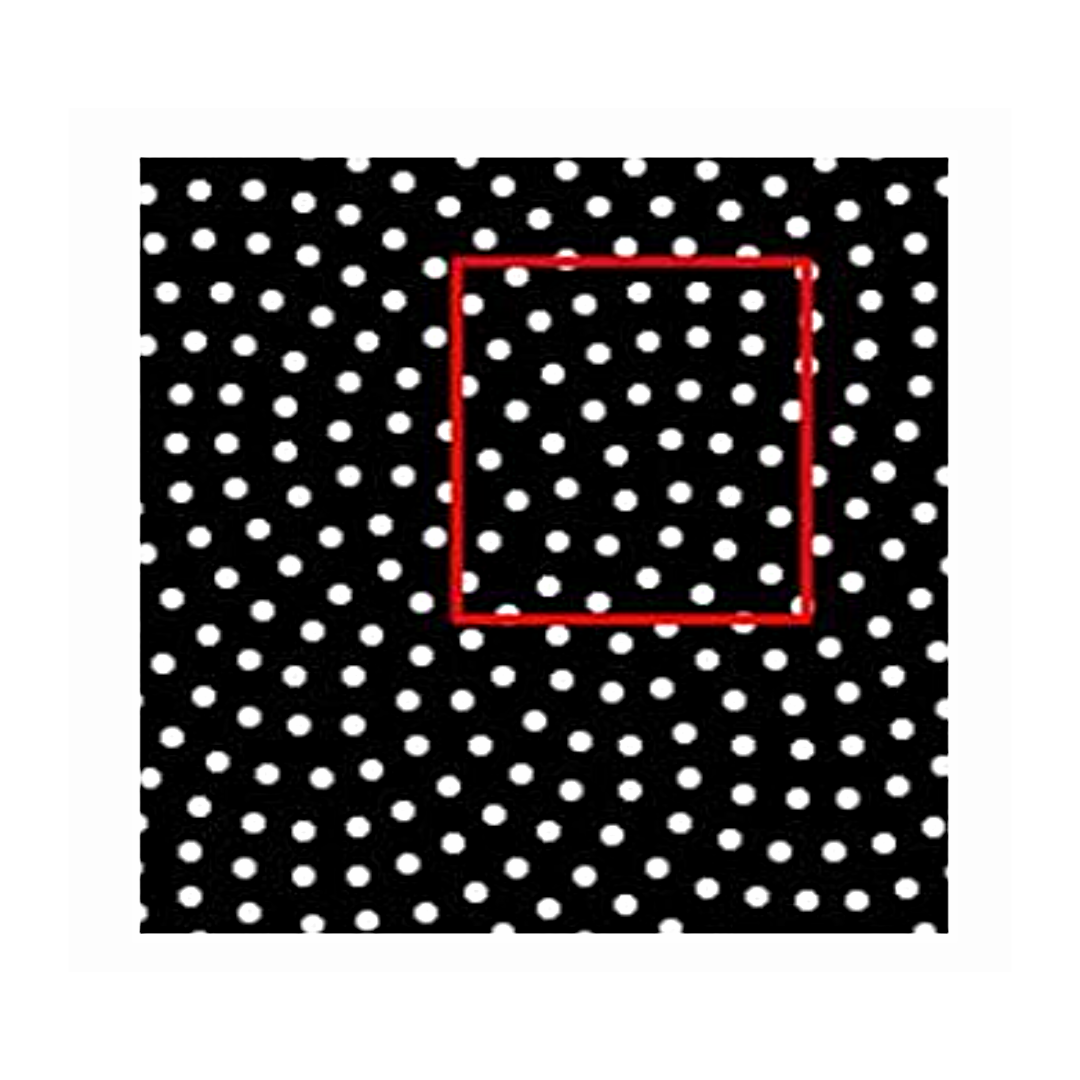
Computer engraving
Meshing is determined by the number of dots per cm². E.g., 45 dots = 17 mesh.
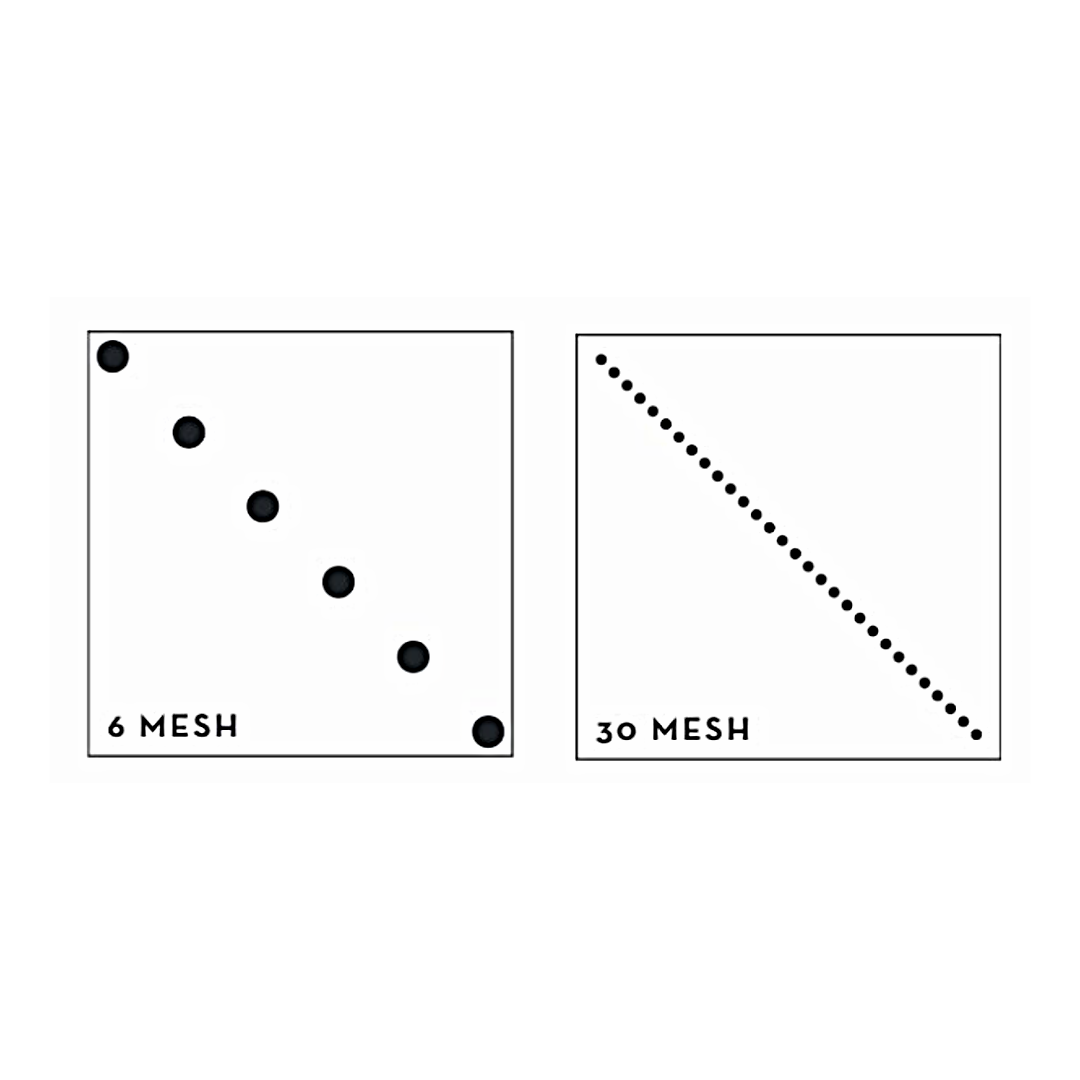
Straight-line engraving
Meshing corresponds to the number of dots on the diagonal per square inch.
The finer the textile, the higher the meshing should be, and therefore more numerous but smaller dots to prevent strike-through.
Example of applications:
- 6 mesh - Chest piece cover
- 13/17 mesh - Coat
- 23/25 mesh - Jacket
- 30/40 mesh - Fine fabric/sheer fabric
The different coating technologies
Coating is the process by which the glue is deposited onto the textile base. Depending on the desired look and resistance, three main technologies are used:
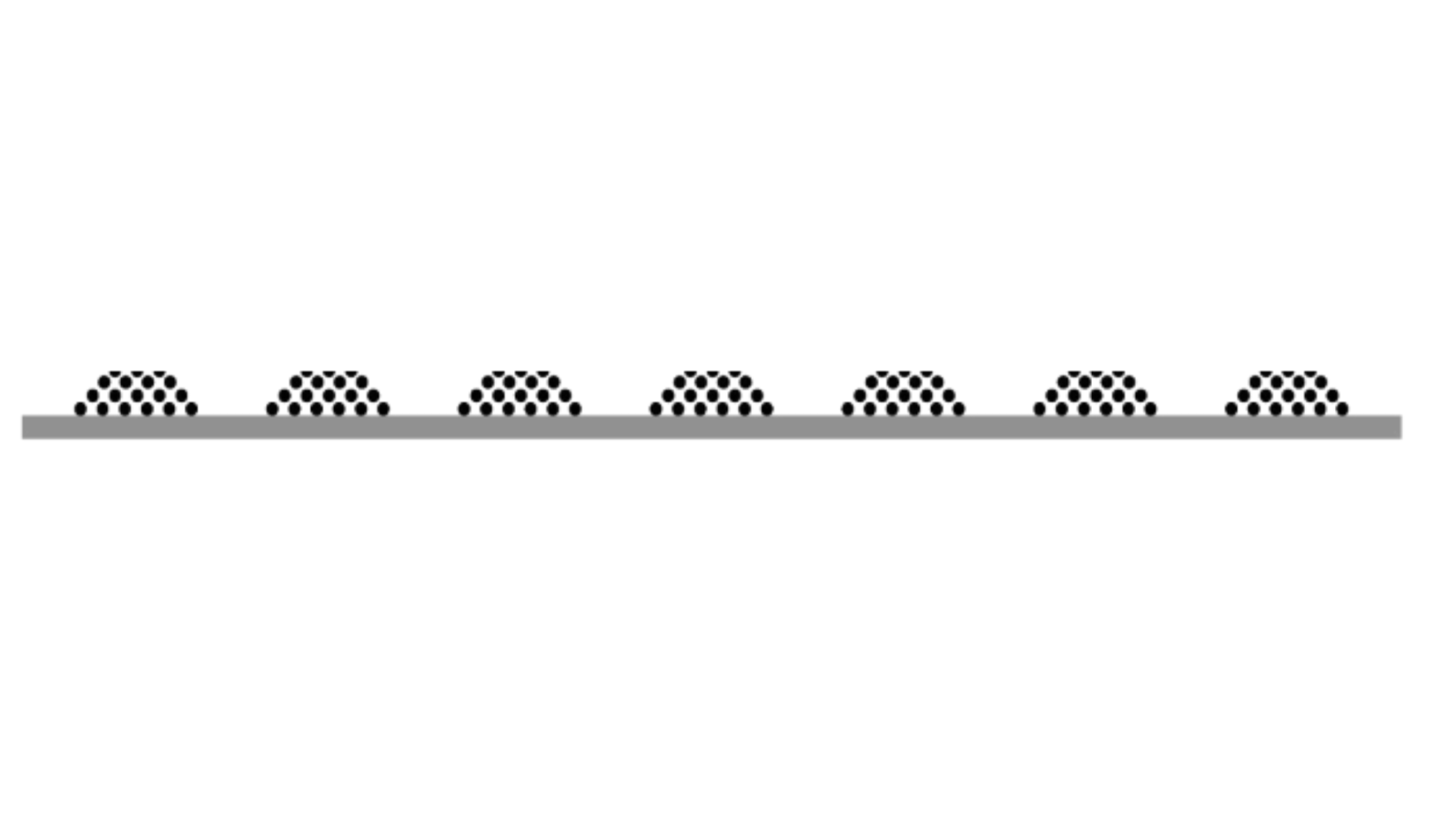
Powder dot
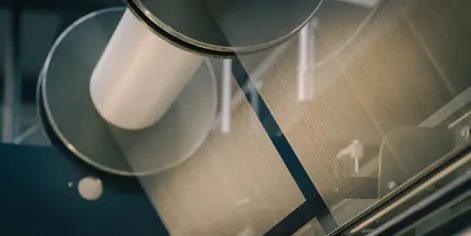
The glue is deposited in powder form, then fixed by passing between heated cylinders (calendering). It is an effective method for standard bonding.
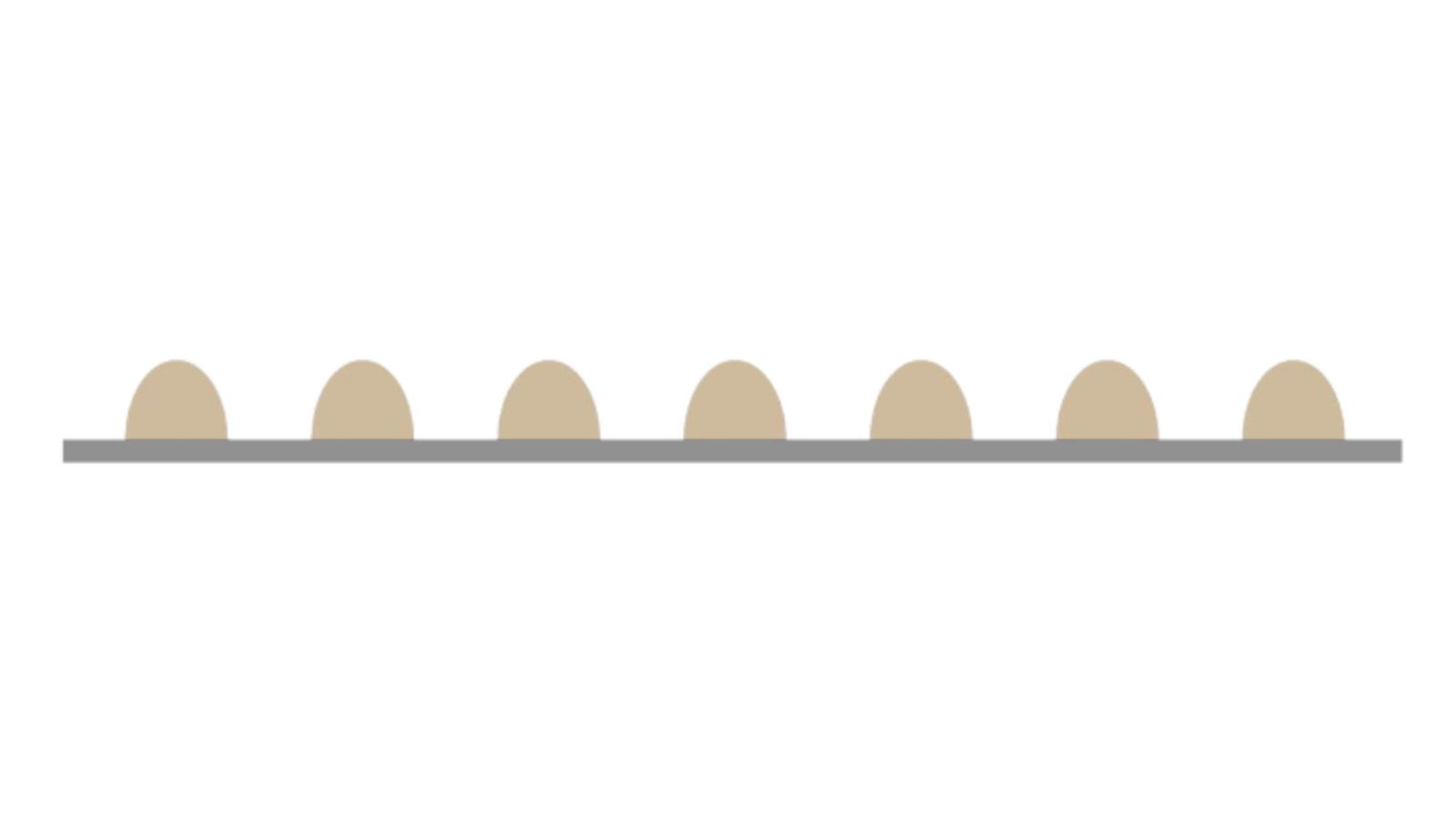
Paste dot
A liquid chemical preparation applied by a specialized machine (STL) is used, which then requires passing through an oven for drying.
Double dot
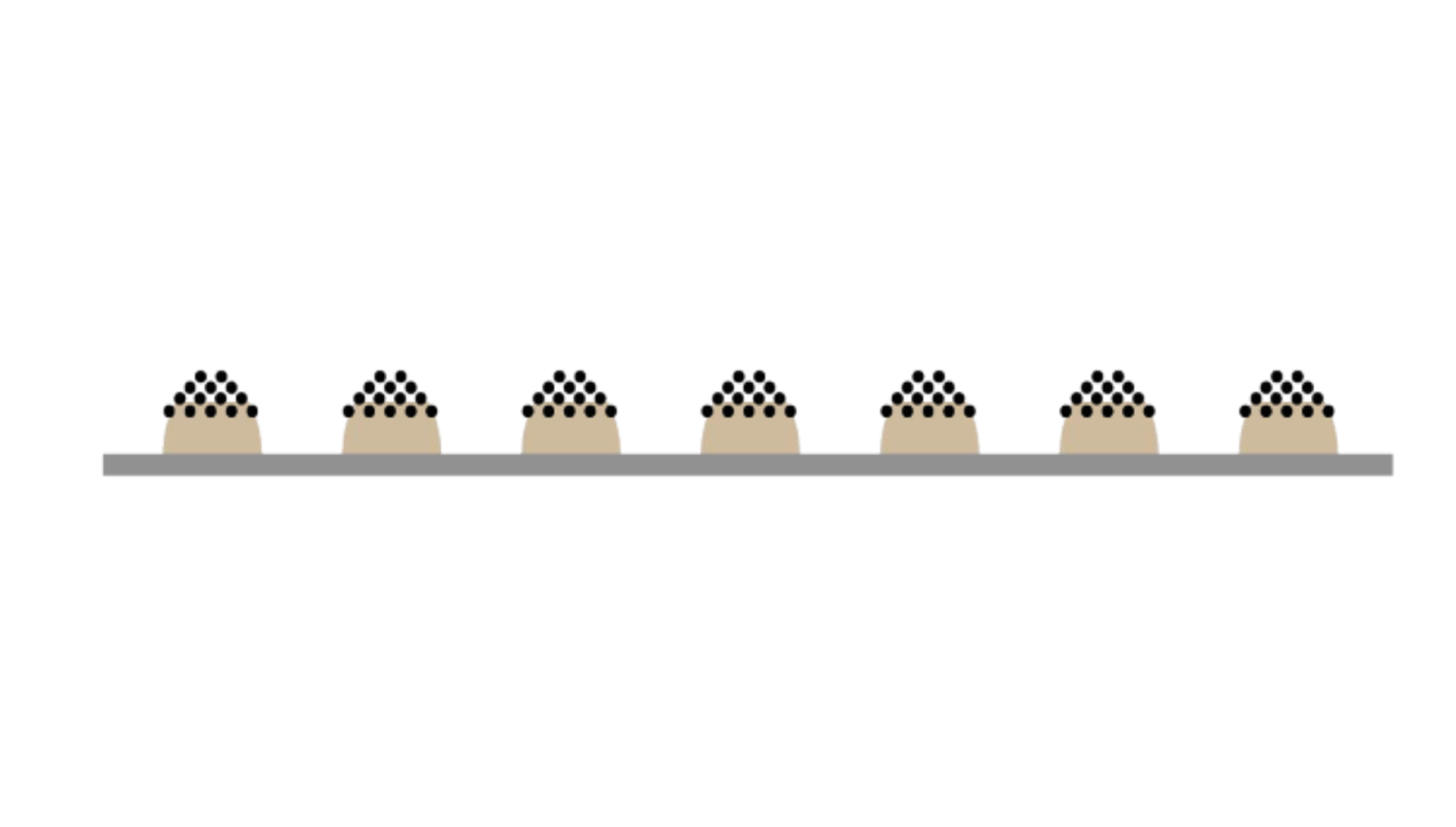
This premium technique combines the previous two on a DSL machine. Powder is scattered onto a still-wet paste dot, creating a higher-performing raised dot. This process offers superior adhesion and better care resistance.
GMP treatment can be added to the paste dot or double dot. This chemical process blocks the base of the glue dot to prevent strike-through (the passage of glue through the outer fabric).
Chemical composition and care
The choice of coating polymer determines the garment's resistance to future washings:
| Polymer | Properties and care |
|---|---|
| Polyester | Resistant to classic water washing. |
| Polyamide | Versatile: suitable for classic washing and dry cleaning. |
| Polyethylene | High resistance: ideal for high-temperature washings and post-treatment (e.g., Jeans). |
| Polyurethane | Specific: designed for technical or "slippery" fabrics that are difficult to bond. |
The choice of coating is just as crucial as the choice of the textile base. A poor match between the glue polymer and the garment's washing method (e.g., dry cleaning on a glue that is only water-resistant) can lead to premature peeling of the interfacing.
Application methodologies for fusible interfacing
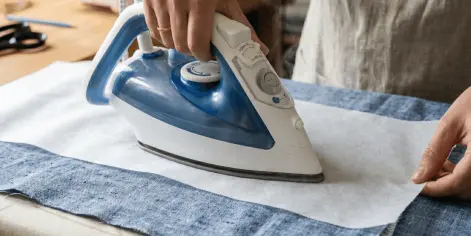
There are three main methods for fusing an interfacing: the iron, the plate press, and the continuous press.
| Equipment | Precision | Cost | Use |
|---|---|---|---|
| Iron | Low | Low | For quick fixes or domestic use. |
| Plate press | Medium | Medium | A good compromise for small workshops. |
| Continuous press | Maximum | High | Ideal for professional quality. |
To learn more about each of these methods, visit our blog “how to apply fusible interfacing”.
As you will have understood, fusible interfacing is much more than a simple accessory: it ensures the structure, longevity, and drape of your garments. Whether you are looking for the efficiency of a non-woven, the stability of a woven, or the flexibility of a knit, each project requires a unique combination of textile base and coating technology.
Successfully applying an interfacing means knowing how to match the technical characteristics of the backing with the constraints of your main fabric and its future care. A good choice guarantees a preserved silhouette and a garment that will stand the test of time and washing.
Ready to structure your next creation? Contact us today for personalized advice or request a sample to test our solutions under real conditions!
FAQ
What is fusible interfacing used for?
Fusible interfacing serves as an invisible "skeleton" for the garment. It stabilizes certain areas (such as necklines), reinforces high-stress parts (buttonholes, pockets), and gives a professional hold to structured elements (collars, cuffs, jacket lapels).
Why interface a fabric?
Interfacing a fabric is essential for two major reasons:
- Durability: it prevents the fabric from deforming, stretching, or fraying over time.
- Aesthetic look: it allows for clean finishes, avoids saggy folds, and ensures that the garment keeps its initial shape, even after several washes.
How to apply fusible interfacing?
Application is done in four key steps:
- Preparation: place the rough side of the interfacing (the one containing the glue dots) onto the wrong side of your fabric.
- Positioning: use a flat and stable surface.
- Application: press with your iron or press. Do not slide the iron, but exert static pressure for the recommended time (usually 10 to 15 seconds).
- Resting: let the piece cool flat for a few minutes so that the glue polymerizes and sets permanently.
To learn more, check out our blog “how to apply fusible interfacing”.
Can you iron directly onto fusible interfacing?
It is highly discouraged to place the iron directly onto the interfacing. The glue could melt and stick to the soleplate of your iron, damaging it.
Always use a pressing cloth (a clean piece of cotton fabric) between the iron and the interfacing to protect your equipment and ensure an even distribution of heat.