Published on
May 13, 2026
Interfacing glossary
Wondering what an interlining, interfacing, or knit is? Need a technical definition? Browse our interfacing glossary by searching for a term in the bar below or by selecting the letter of your choice.
A | B | C | D | E | F | G | H | I | J | K | L | M | N | O | P | Q | R | S | T | U | V | W | X | Y | Z
B
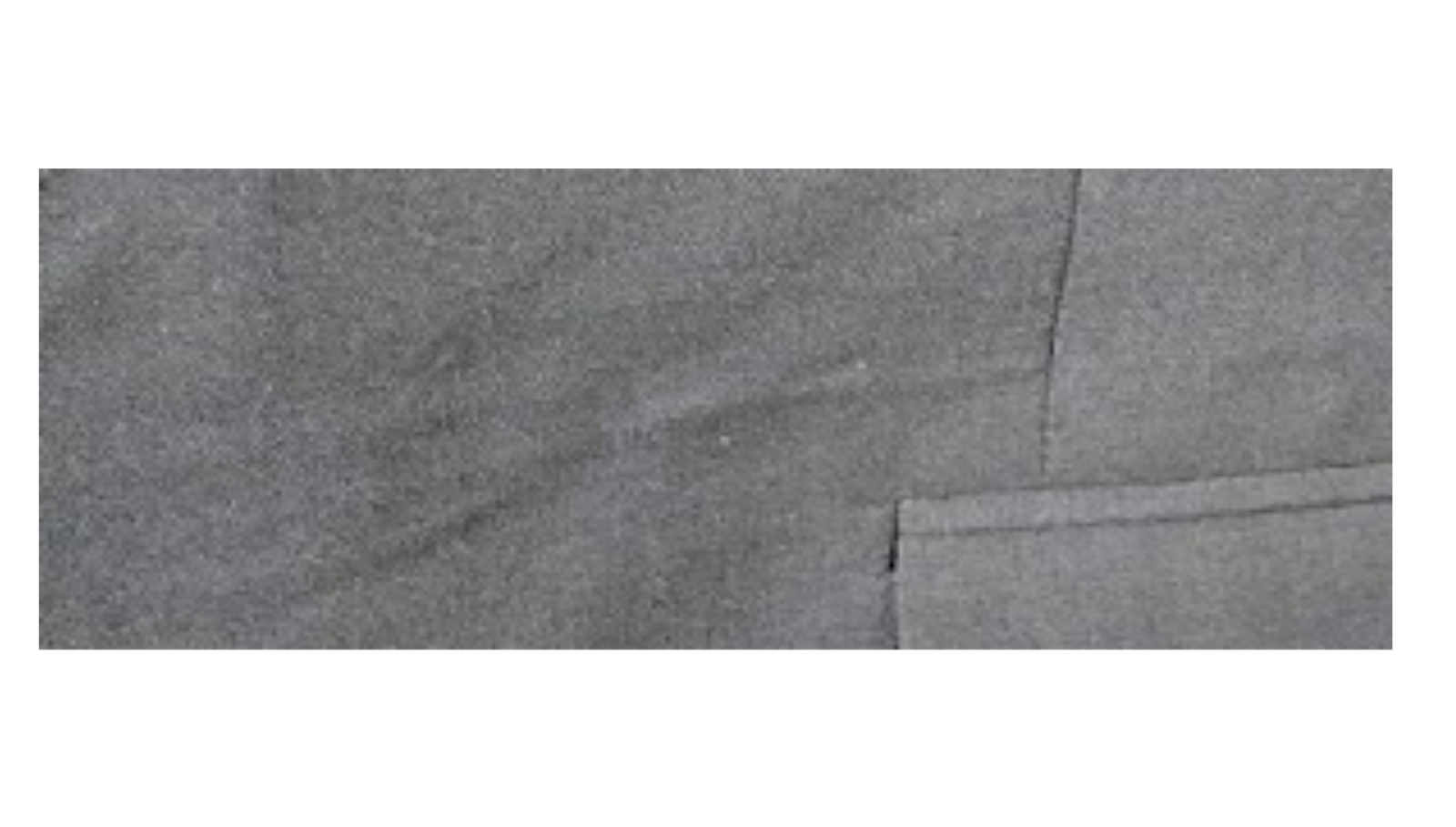 | Bubbling / Blistering | A visual application defect of fusible interfacing, resulting in the appearance of bubbles on the fabric surface. It indicates incomplete adhesion due to a temperature that is too low, insufficient pressure during application, or an initial under-fusing that gives way during washing. |
C
.jpg) | Coating | An adhesive substance (glue) evenly deposited in the form of micro-dots onto the textile base of the interfacing. By melting, it ensures permanent adhesion to the garment fabric. |
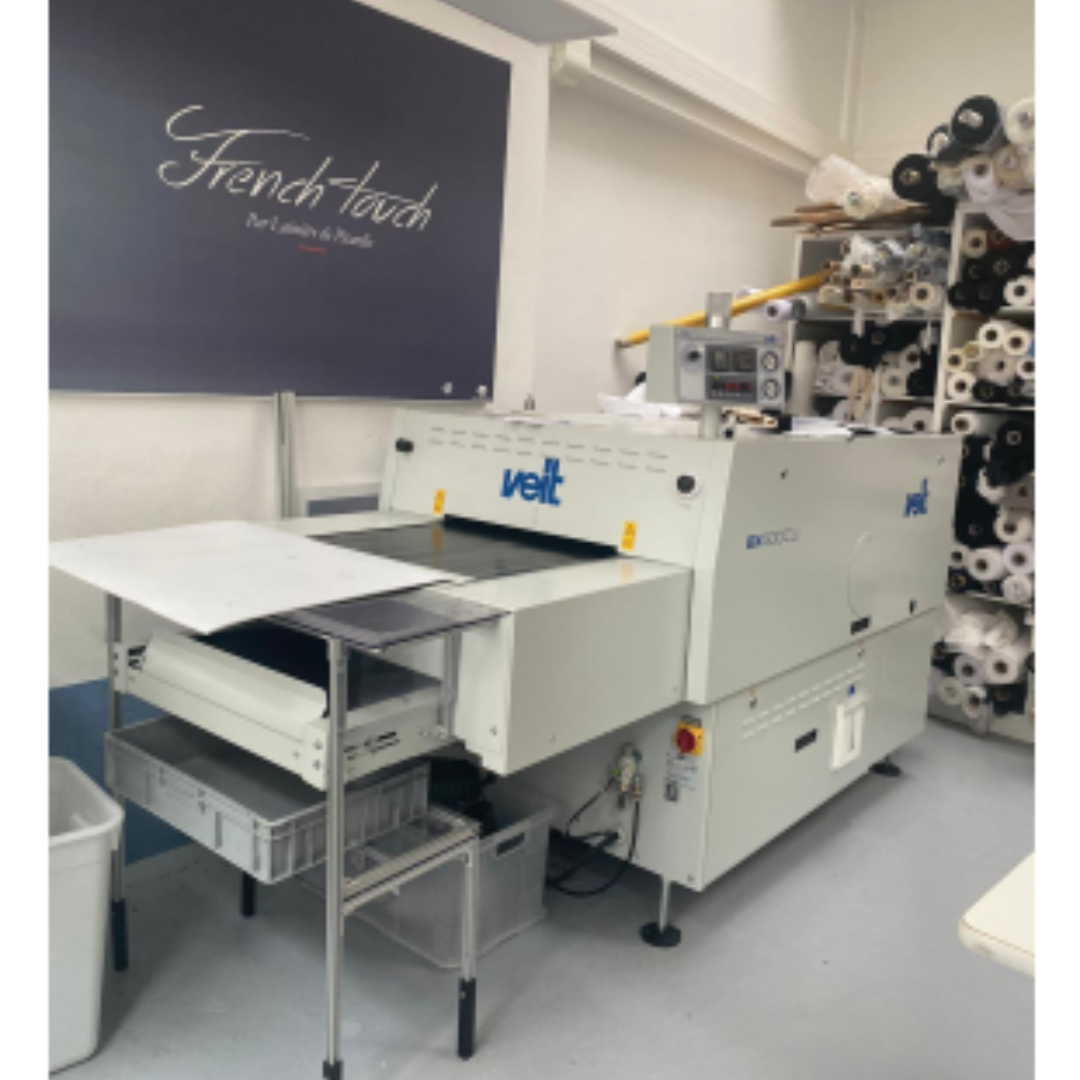 | Continuous Fusing Press | A high-end professional fusing machine designed for industrial production rates. The fabric and its interfacing automatically pass along a conveyor belt between cylinders, guaranteeing perfect compliance with the three key parameters (time, temperature, pressure) without risk of wear. |
D
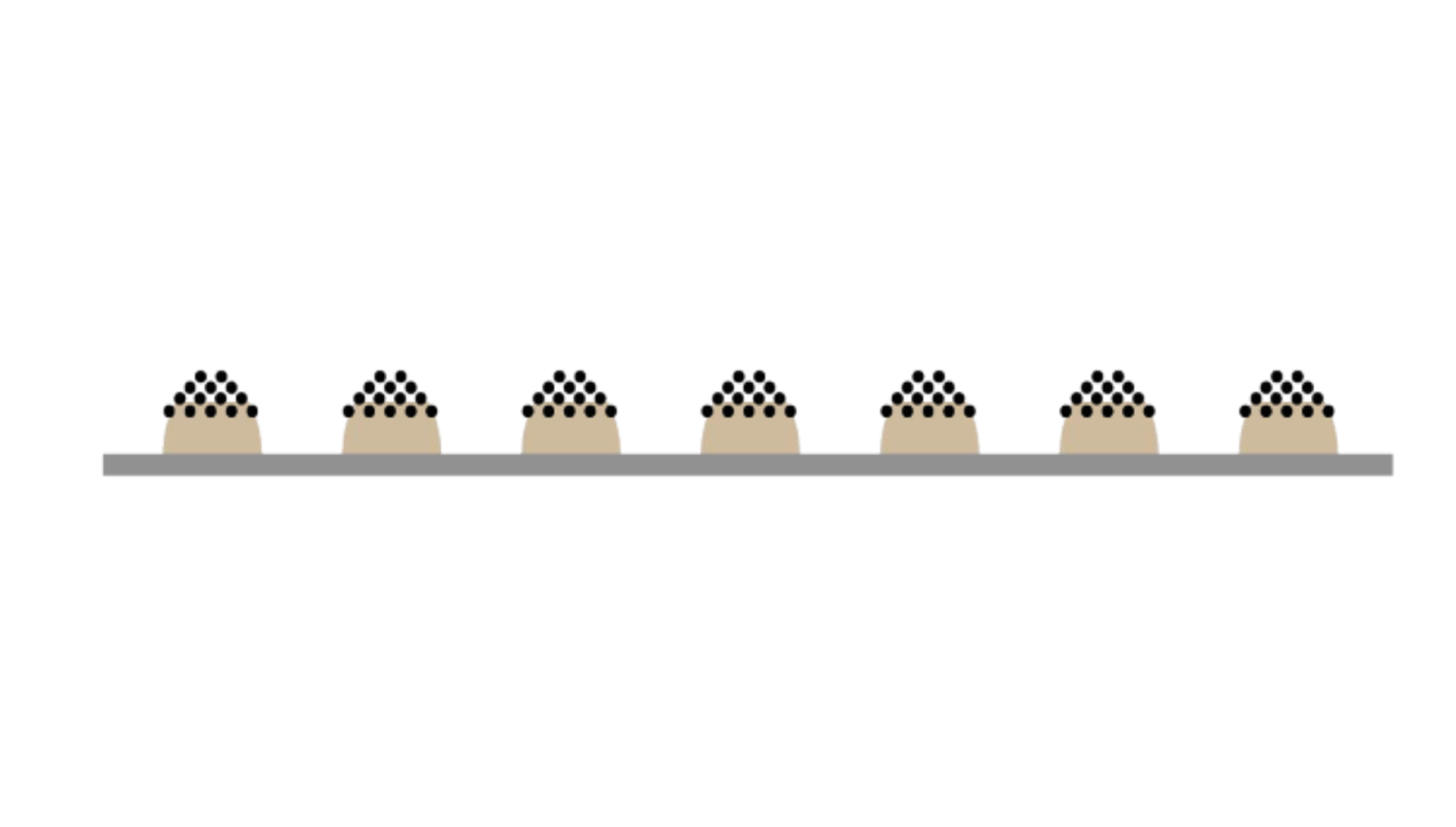 | Double Dot | A premium coating technology (DSL machine) combining paste dot and powder dot methods. Resin powder is deposited onto a wet paste dot to create a relief, offering superior adhesion and excellent wash resistance. |
F
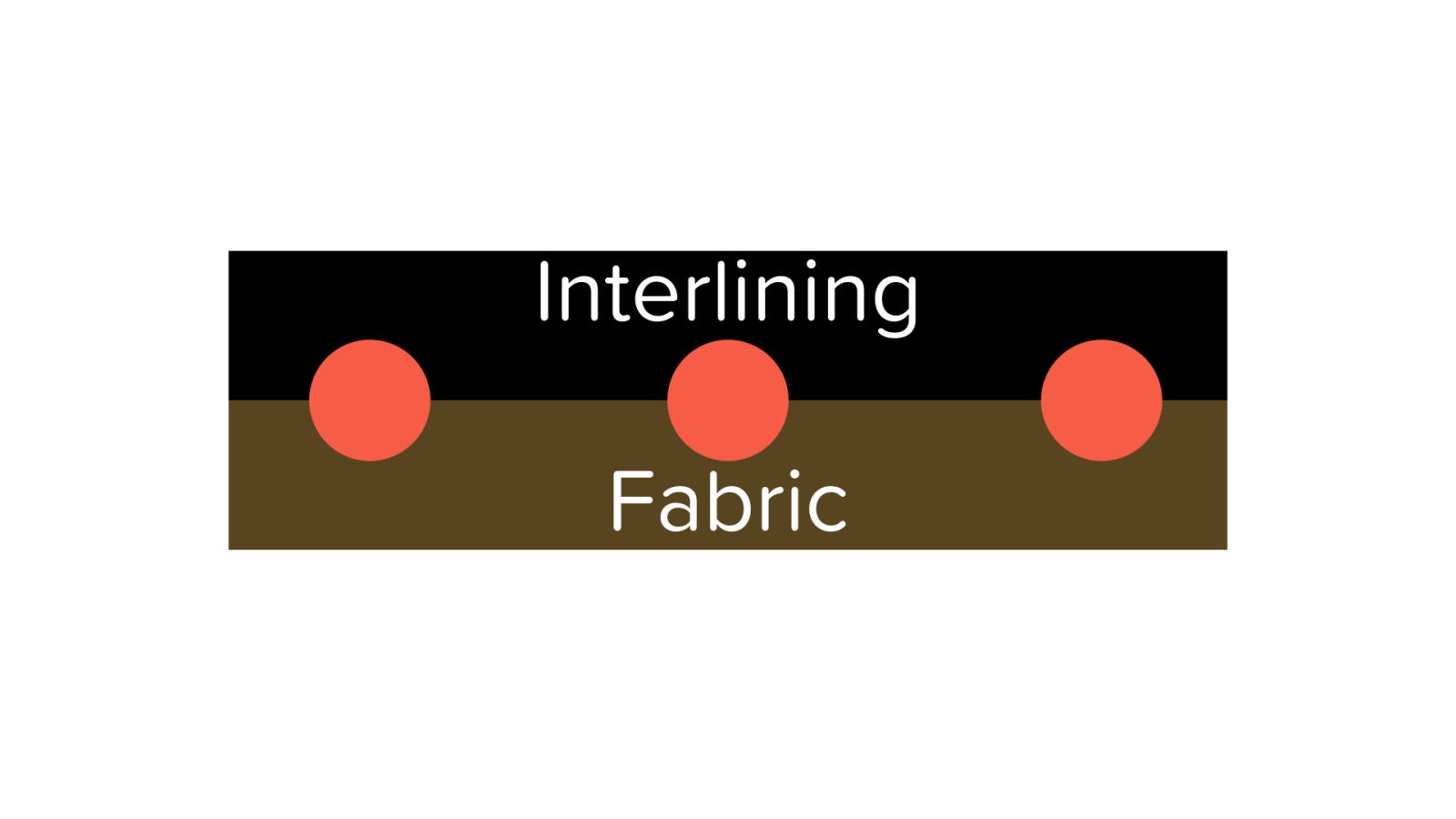 | Fusing Process | The technical operation bonding the interfacing and the textile together using glue dots under the action of heat and pressure. A successful fusing process depends on 3 golden rules: the correct glue temperature, adequate heating time (often 10 to 15 seconds), and sufficient pressure. It consists of 4 phases: pre-fusing, heating, pressure, and cooling. |
G
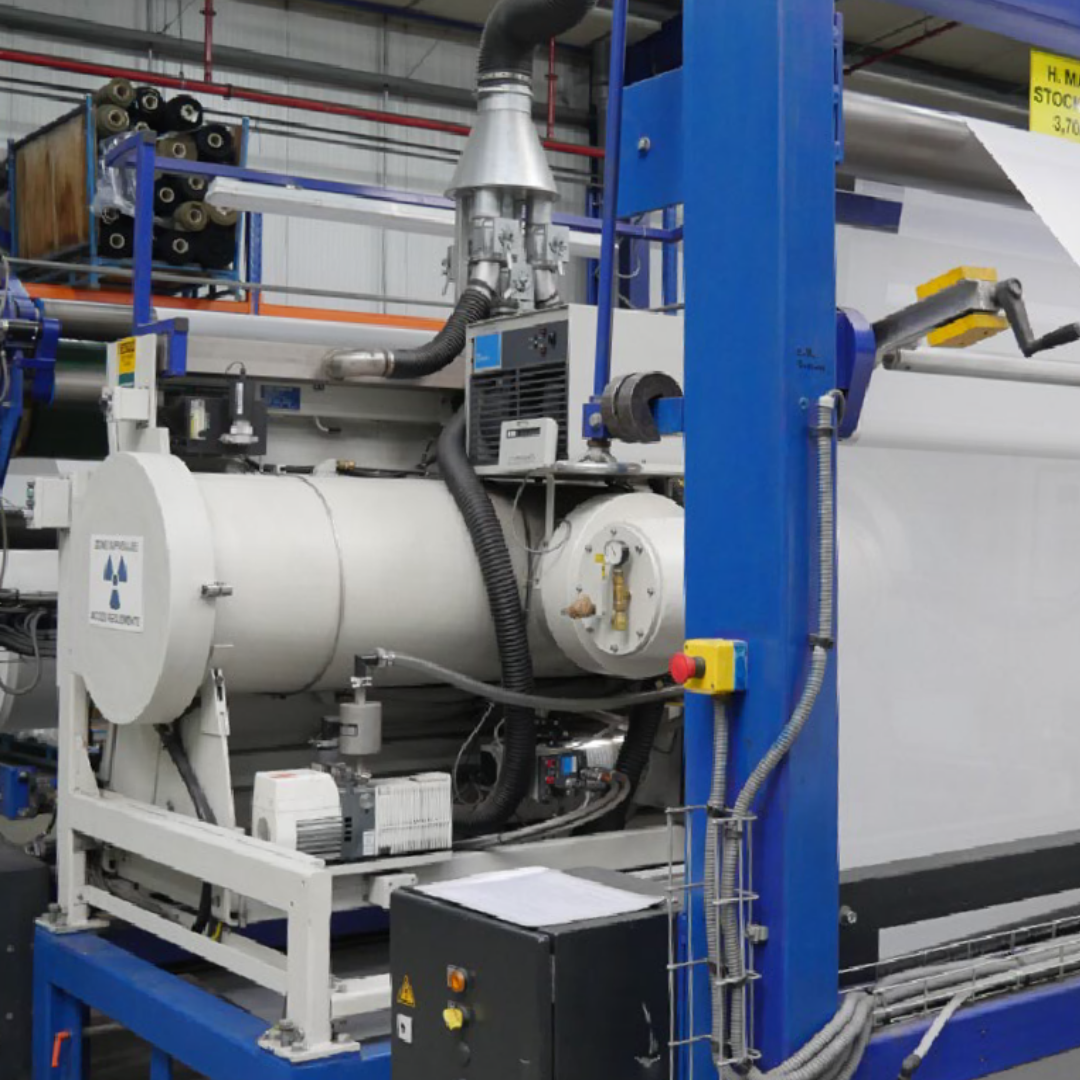 | GMP Treatment | An additive chemical process (applied to the paste dot or double dot) that forms a physical shield at the base of the glue to prevent strike-through or strike-back (the unwanted migration of glue through the fibers of the outer fabric). |
H
Hand / Handle | A professional term referring to the feel, flexibility, texture, and final drape of a fabric after it has been fused with its interfacing. |
I
.png) | Interfacing / Interlining | A functional textile layer placed between two outer layers of fabric in a garment. It provides strength, support, stability, and structure while improving the garment's overall appearance and durability. |
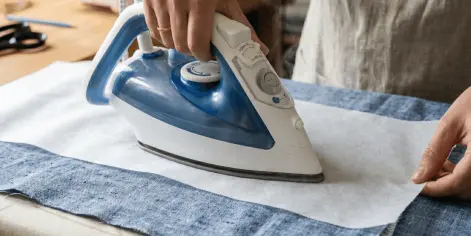
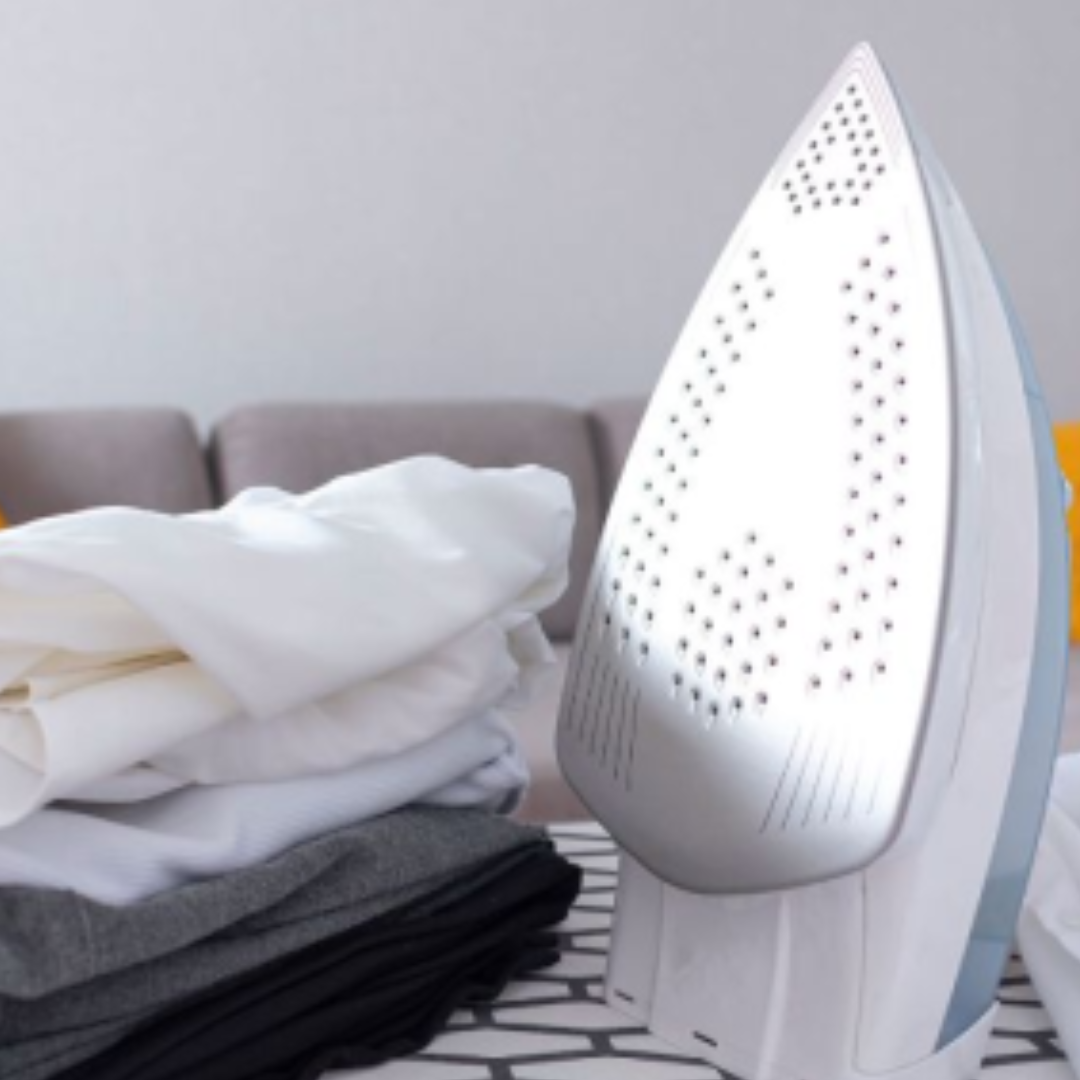 | Iron | The simplest and most economical option for applying fusible interfacing in small-scale or home crafts (such as DIY hems). Its major drawback lies in the difficulty of accurately and uniformly controlling temperature and pressure. |
K
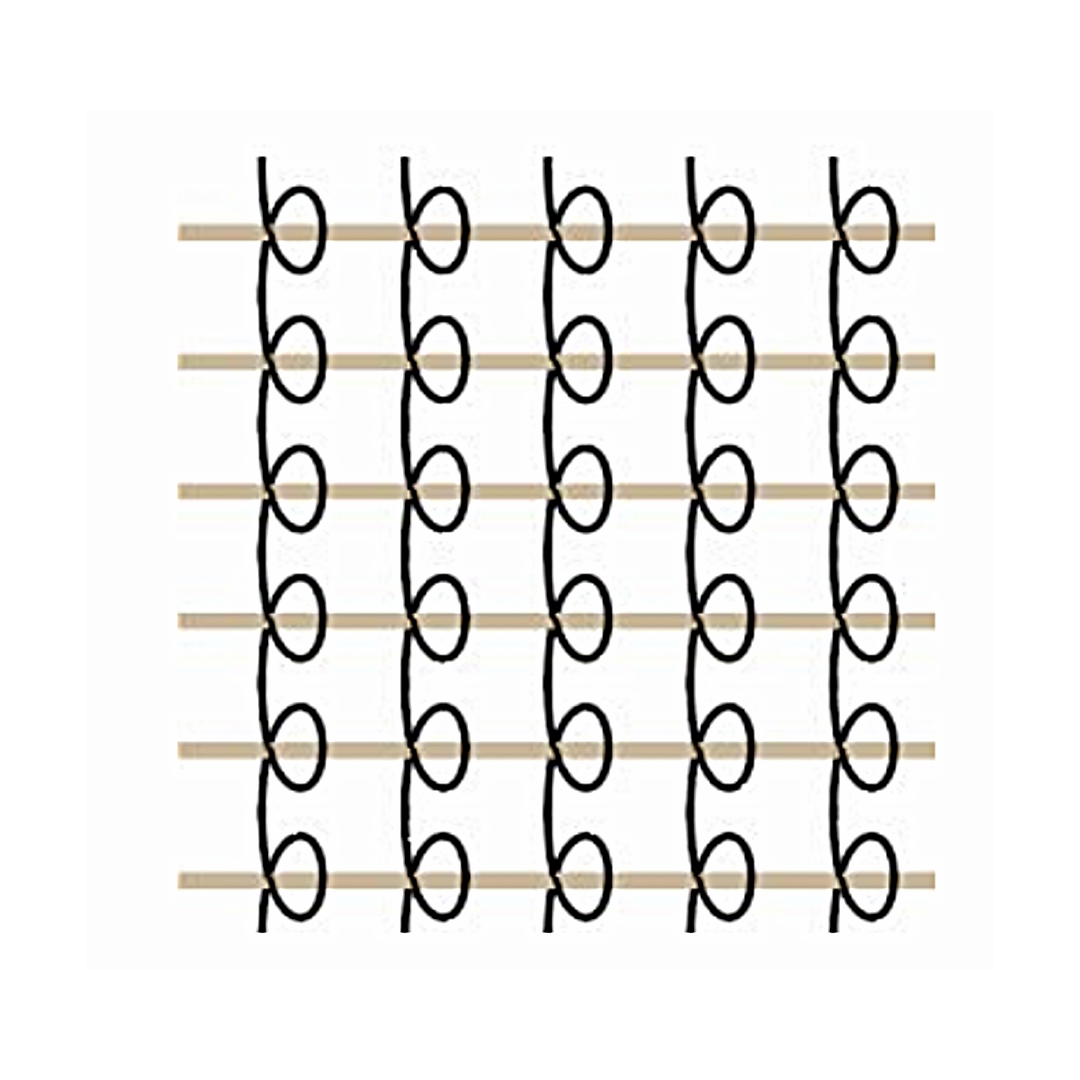 | Knit, Warp-inserted / Weft-inserted | A type of knit structure where the warp is worked under tension to conceal its usual looped appearance. The focus is placed on the weft, whose textured yarn brings density and a voluminous look to the surface. |
 | Knitted | A textile structure obtained by interlocking yarns in the form of loops. This technical process gives it natural elasticity and exceptional shape memory, ideal for fluid silhouettes or women's clothing. |
M
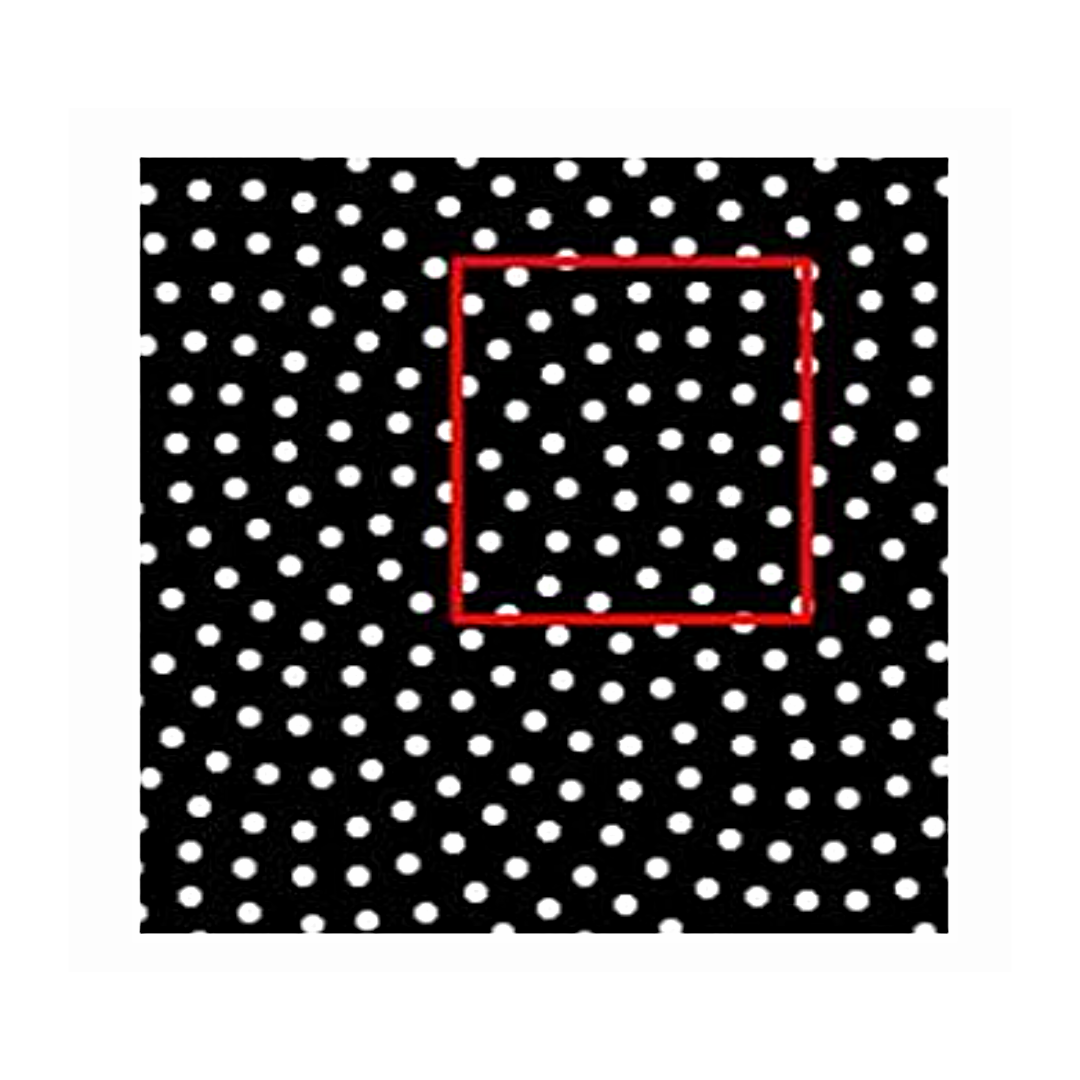 | Mesh count / Mesh size | The density and calculation of the number of glue dots on a given textile surface (depends on the engraving mode: computer or rectilinear). Essential technical rule: the finer the main fabric, the higher the mesh count must be (e.g., 30/40 mesh for fine sheers versus 13/17 mesh for coats). |
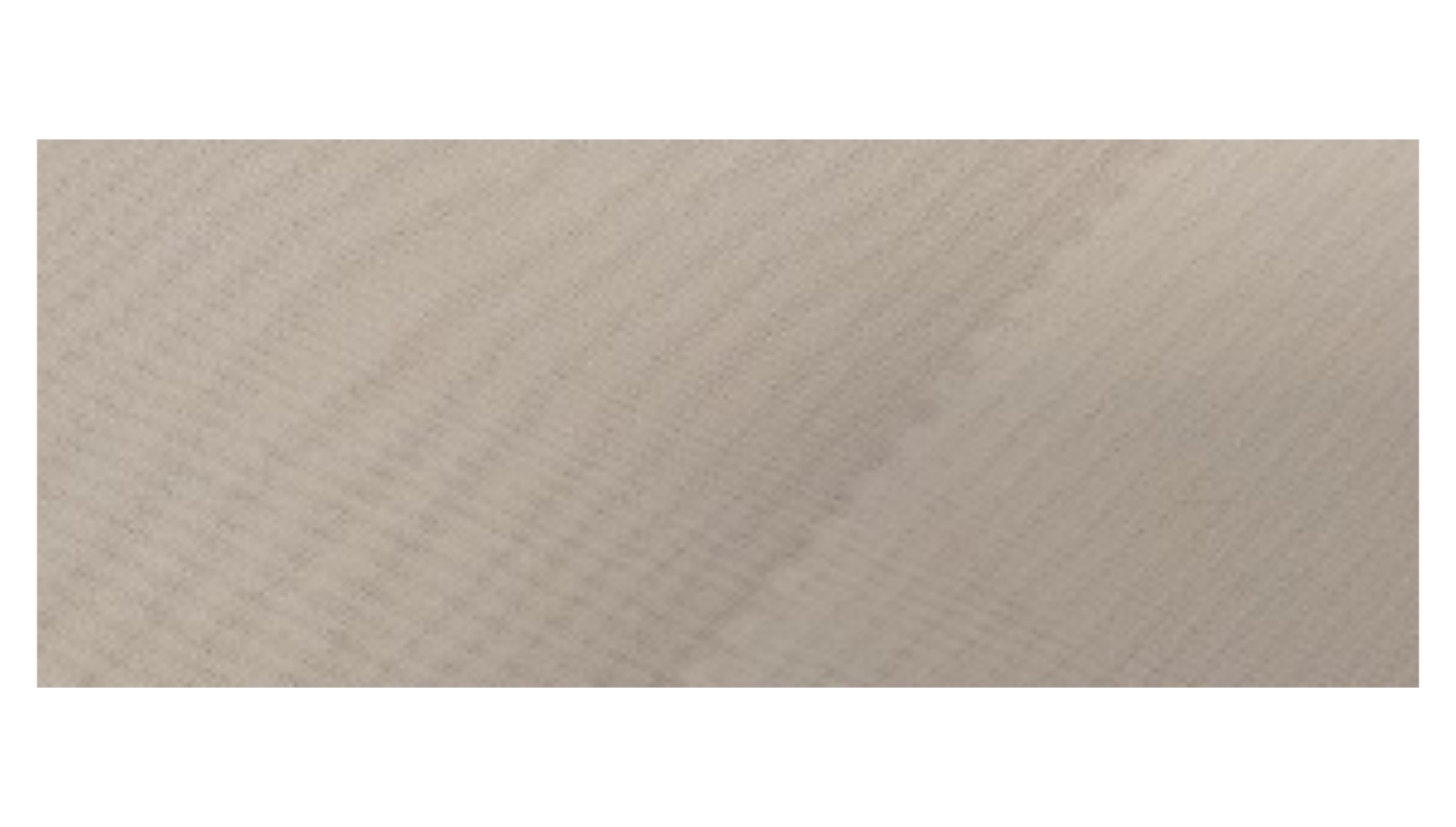 | Moiré Effect / Moirage | Incompatibility between the structure of the outer fabric and the interfacing. When incompatible, a "zebra" pattern appears (especially visible on thin or lightweight fabrics). |
Melting Point / Glueline | The exact temperature at which the coating (glue) changes from a solid to a liquid state. This is the temperature measured at the core of the glue itself, and not the temperature displayed on the fusing machine. |
N
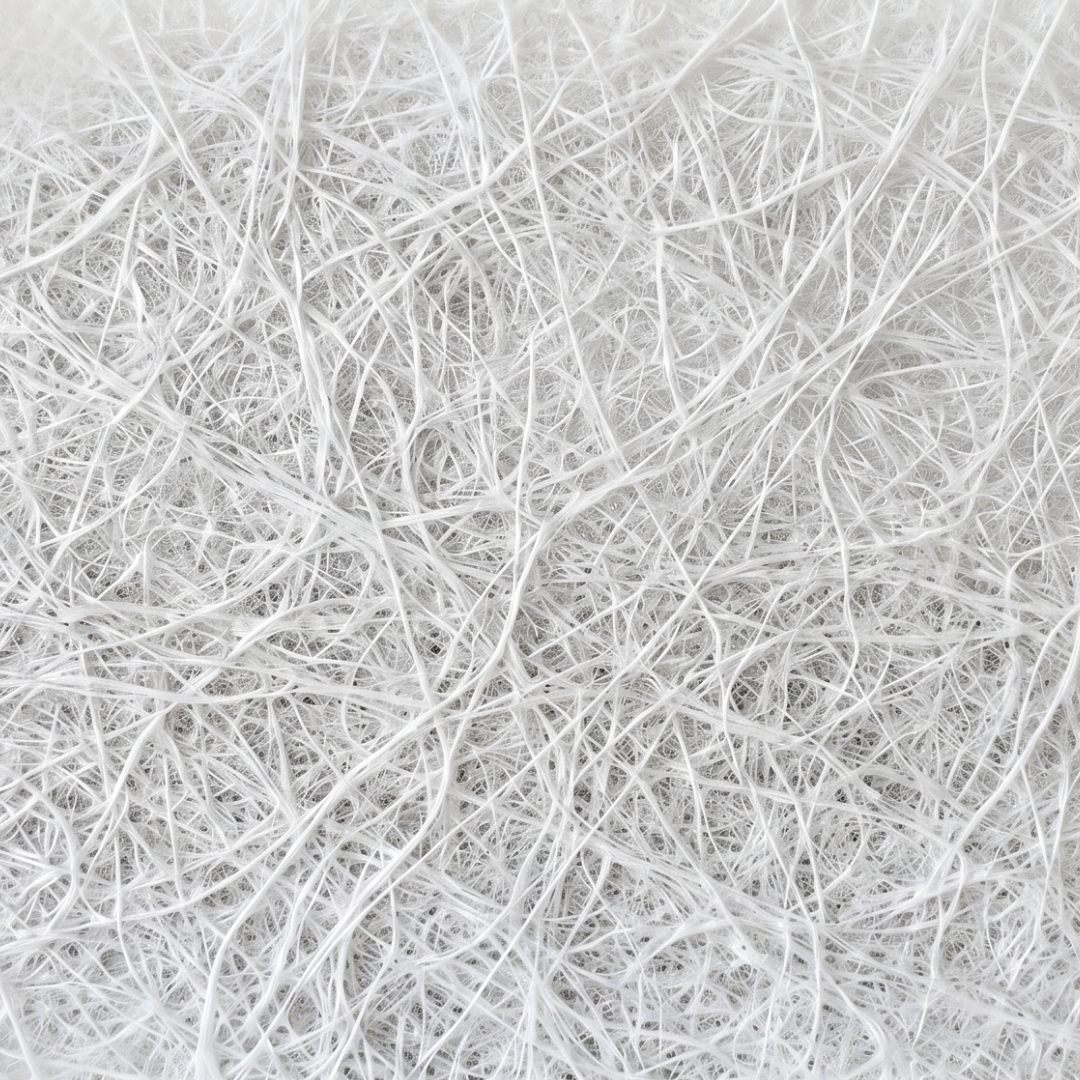 | Non-woven | A textile structure composed of a web of fibers compressed and directly bonded together using thermal or chemical means (without interlocking yarns). Economical and efficient for mass production, it possesses no elasticity and serves primarily to stabilize pieces. |
O
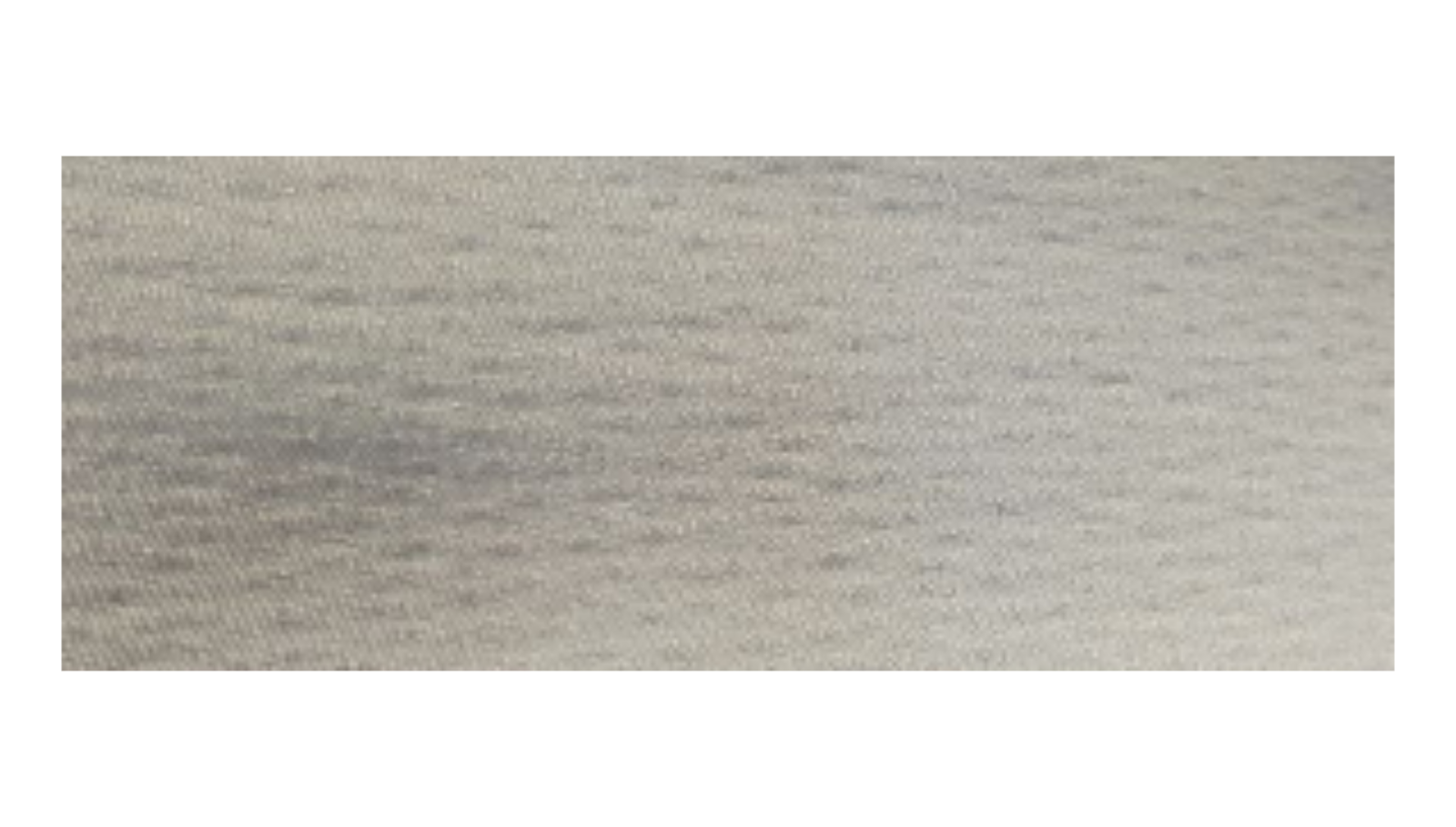 | Orange Peel Effect | A surface defect that appears when the coating or adhesive dots are too large. |
P
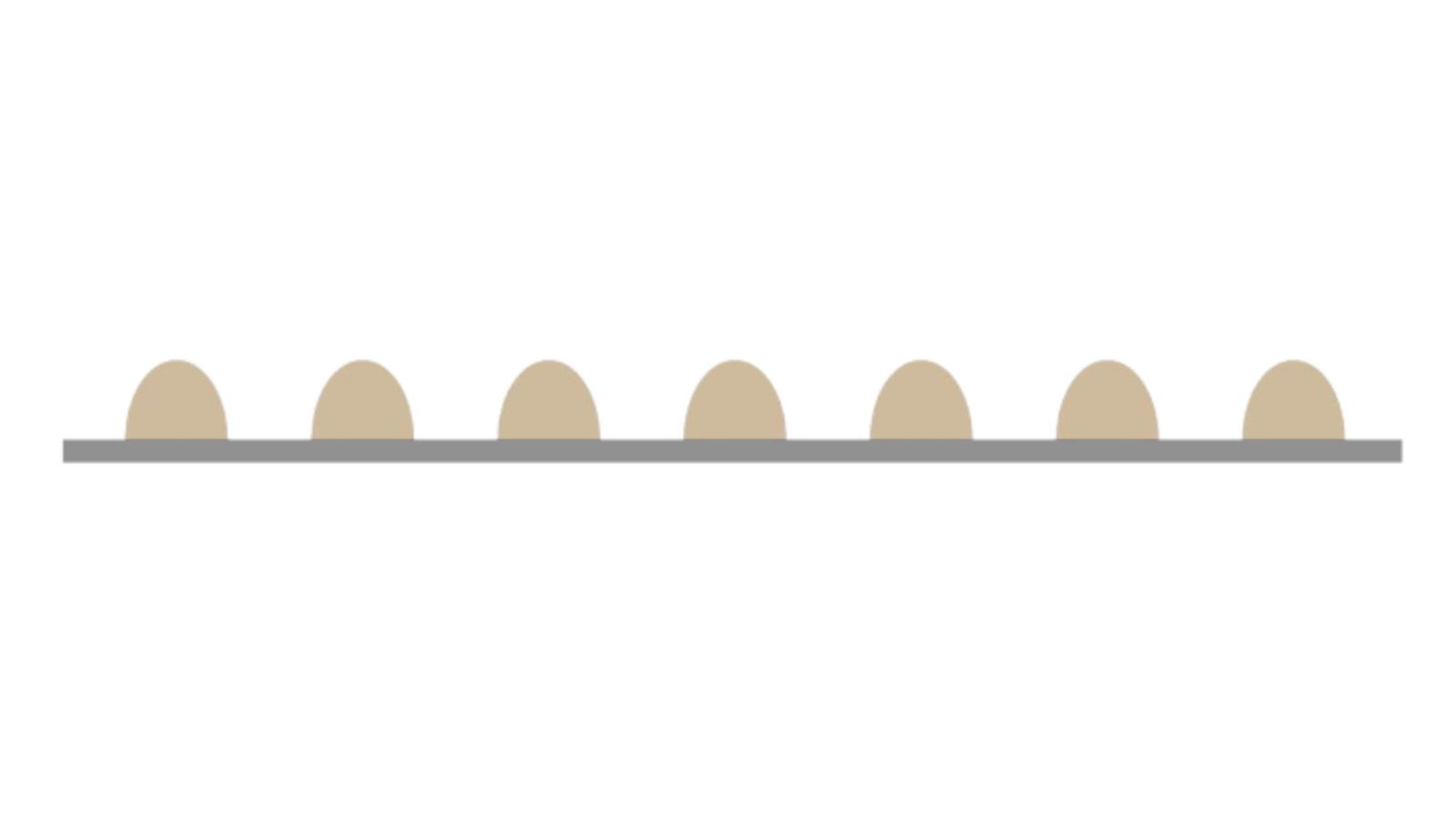 | Paste Dot | A coating method (STL machine) that applies a liquid or paste-like glue onto the base fabric, which must then be dried and cured in an oven. |
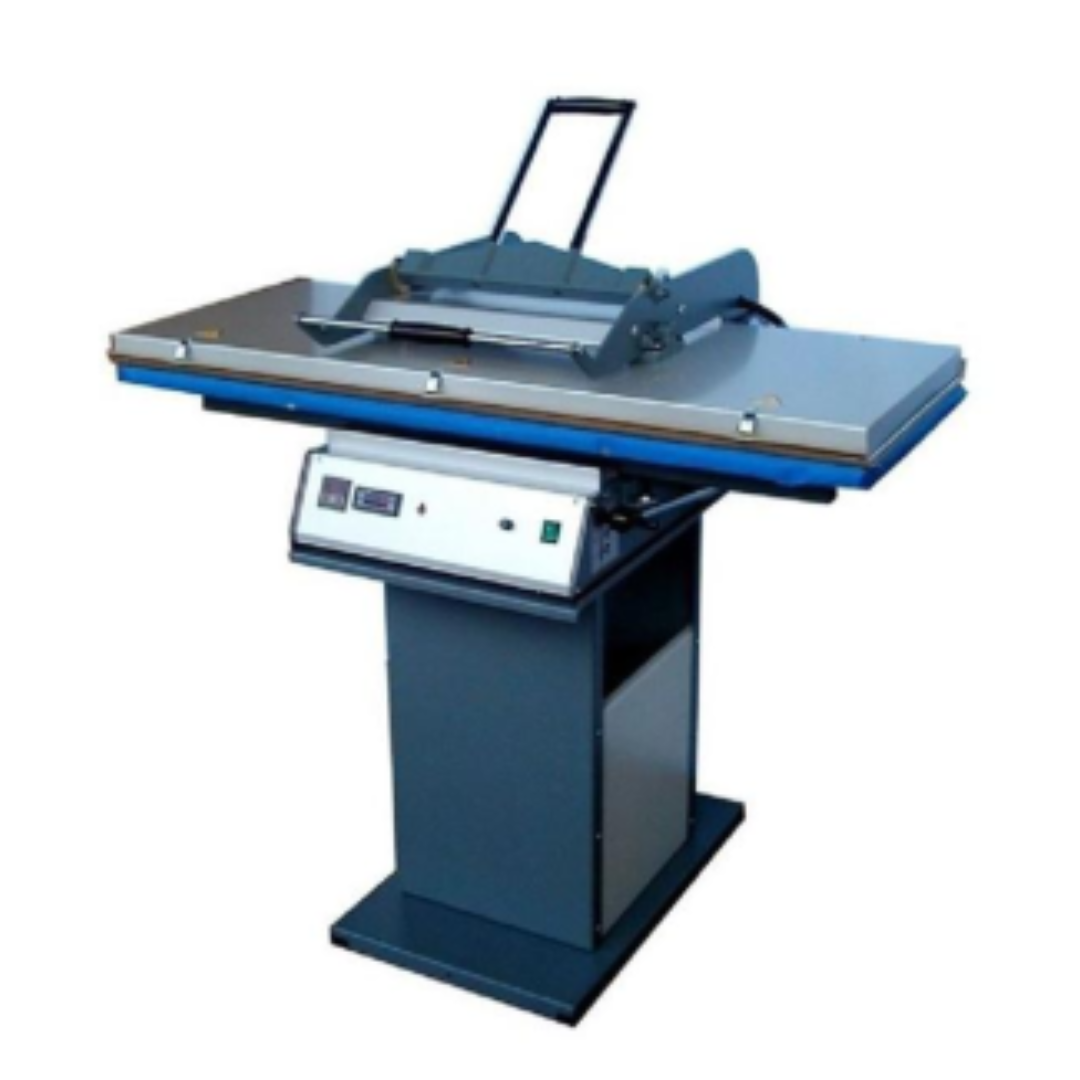 | Flatbed Press | An electronically controlled machine offering a good quality-to-price ratio for medium-scale production. It allows for much more precise adjustment of temperature and pressure than a hand iron. Using this press is highly recommended for fusing small parts. |
Polyamide | A versatile adhesive coating polymer formulated to withstand both traditional household water washing and the chemical products used in dry cleaning. | |
Polyester | A standard adhesive coating polymer primarily designed to provide good resistance to conventional water washing. | |
Polyethylene | A heavy-duty coating polymer ideal for withstanding high-temperature industrial laundering as well as harsh post-treatments (e.g., Denim/Jeans garments). | |
Polyurethane | A highly specific adhesive coating polymer specially formulated to reliably bond technical or "slippery" fabrics that are otherwise difficult to fix. | |
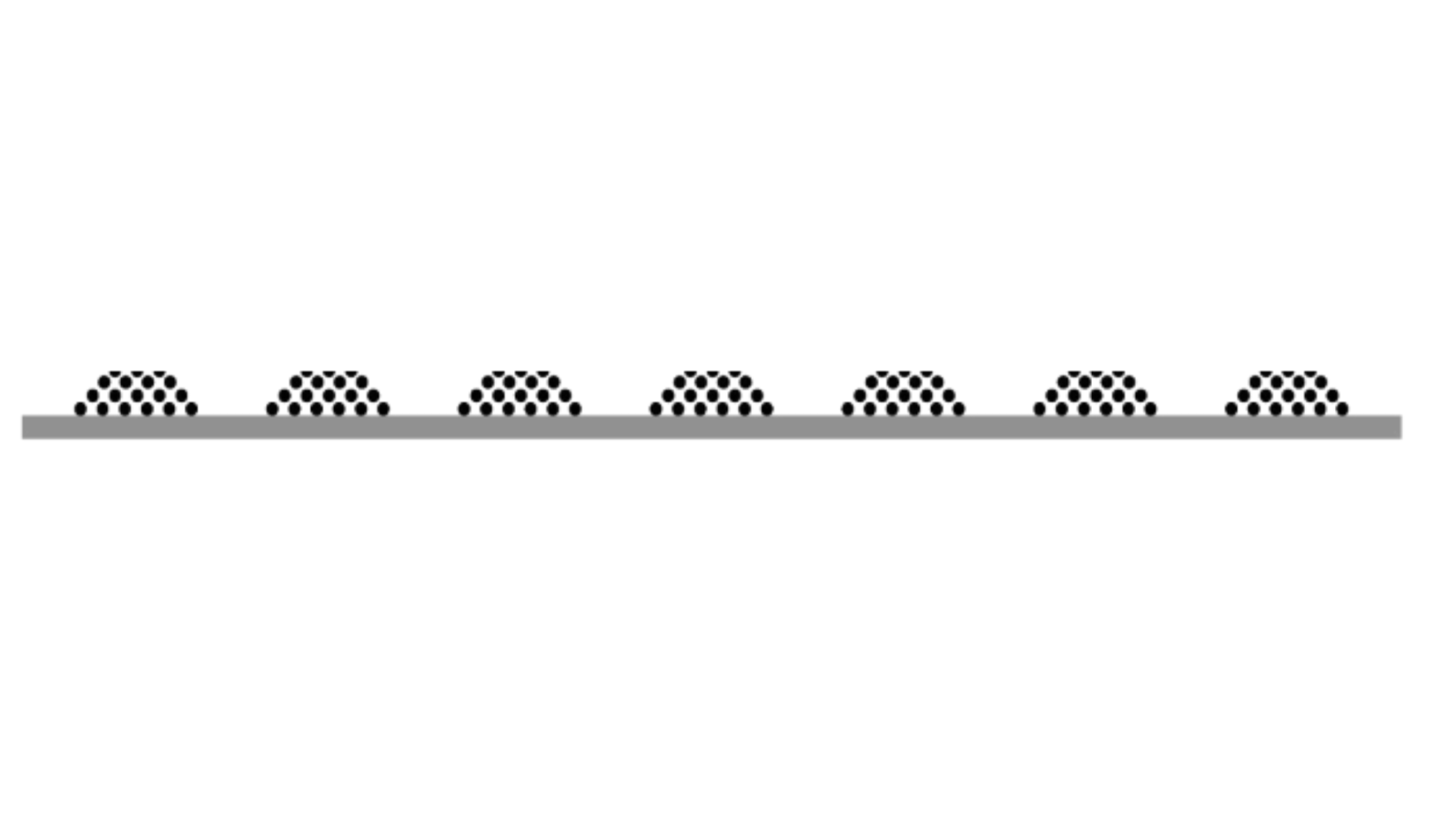 | Powder Dot | A coating process consisting of scattering solid grains of glue onto the textile base, which are then mechanically fixed by passing between heated rollers (calendering). |
R
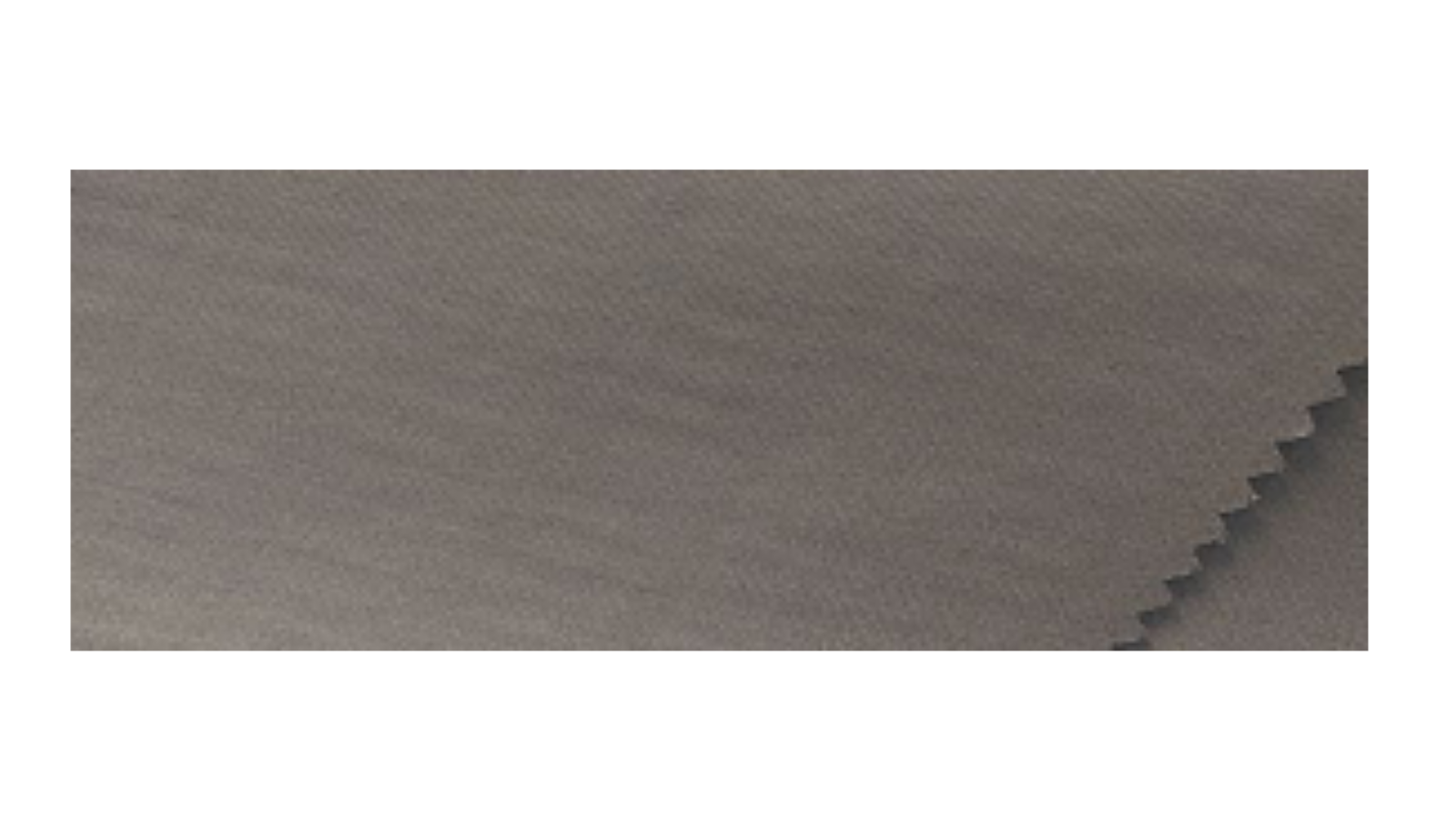 | Shrinkage Bars / Ropes | A defect where the interfacing does not follow the movement of the fabric during fusing. This happens when a stable interfacing is applied to an unstable fabric, causing "bars" or ridges to appear. |
S
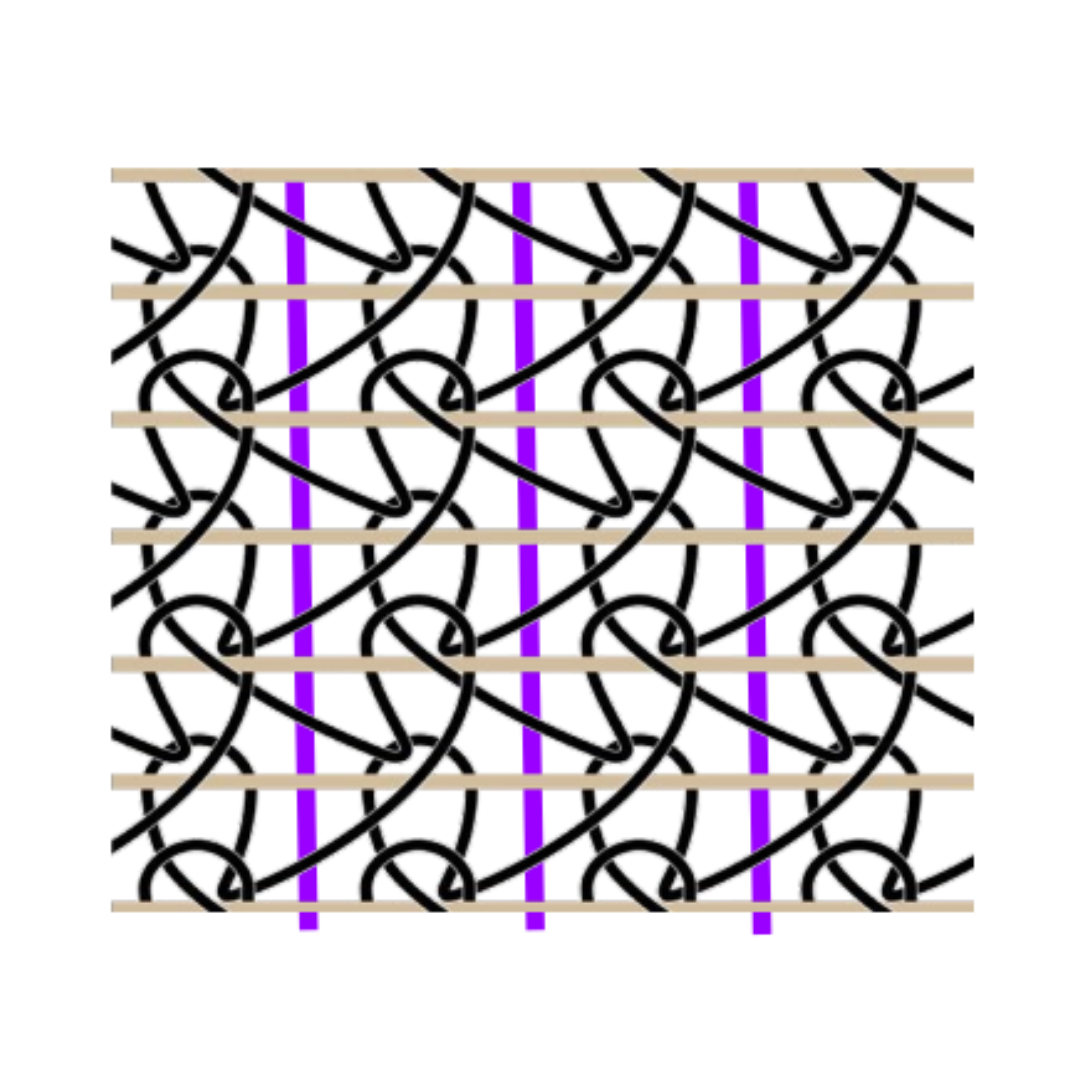 | Satin Top | An extremely dense hybrid knit structure. It combines an inserted weft and an additional non-knitted warp, resulting in a tightly closed, highly opaque, and voluminous textile. |
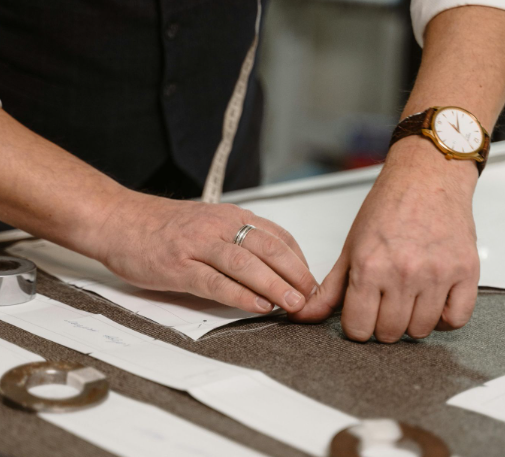 | Sew-in Interfacing | A structural reinforcement inserted without adhesive. Used for delicate fabrics or to achieve higher stiffness (e.g., tailor's canvases, chest pieces, felts). |
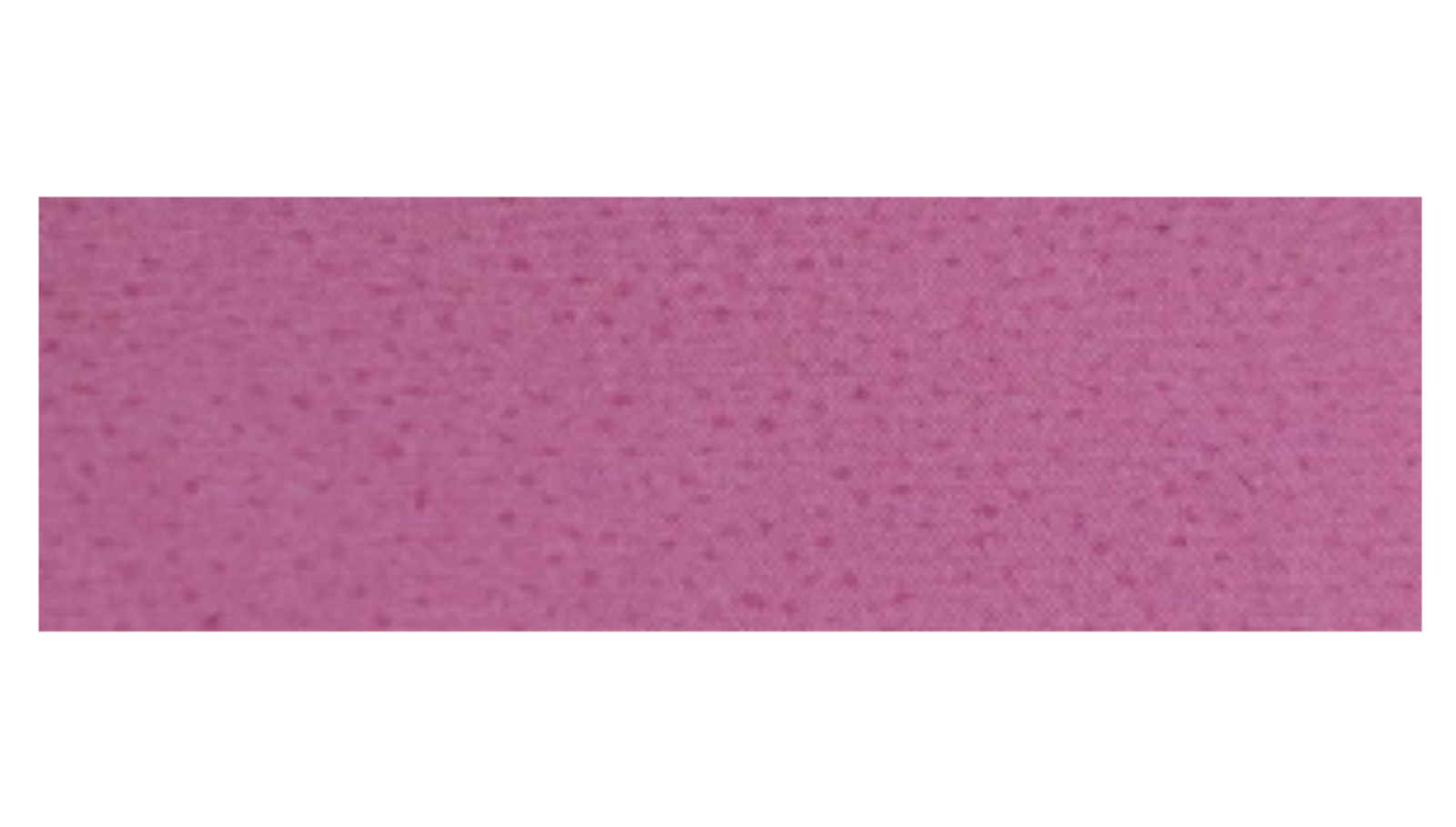 | Strike-through / Over-fusing | A defect that appears when the coating or adhesive dots bleed directly into or through the garment fabric. |
T
Textile Base | The backing structure of the interfacing, which can adopt one of three key configurations (woven, knitted, or non-woven). It dictates the final fall, drape, and flexibility of the garment piece. | |
.png) | Thermoplastic / Fusible Interfacing | A textile coated with an adhesive layer (coating) that bonds to the fabric through heat and pressure. It structures the garment cleanly without visible seams. |
U
Under-fusing | A major technical defect occurring when heat or pressure conditions were insufficient to anchor the adhesive. The interfacing eventually detaches or blisters due to water or heat during subsequent washes. |
W
.png) | Weave | The interlacing pattern of warp yarns (vertical) and weft yarns (horizontal) on a loom. It is this technical choice that changes the "hand" (the feel and support) of a fabric. |
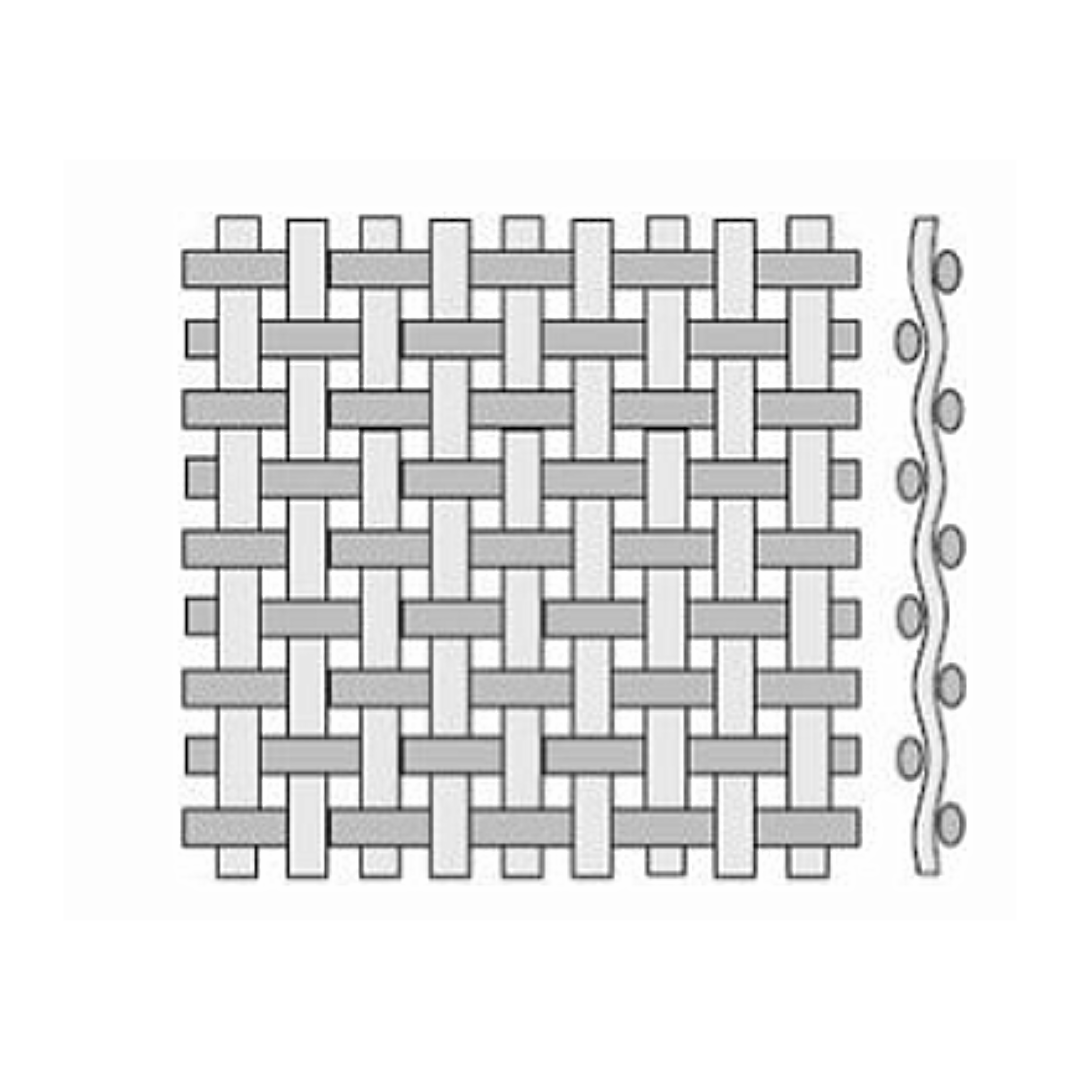 | Weave, Plain 1/1 | The most classic and simple weave style. The warp yarn and the weft yarn alternately pass under and over each other (the yarn is only visible when passing over). |
.png) | Weave, 2/2 | A regular woven pattern type where the yarn passes over twice, then under twice across the perpendicular yarns. |
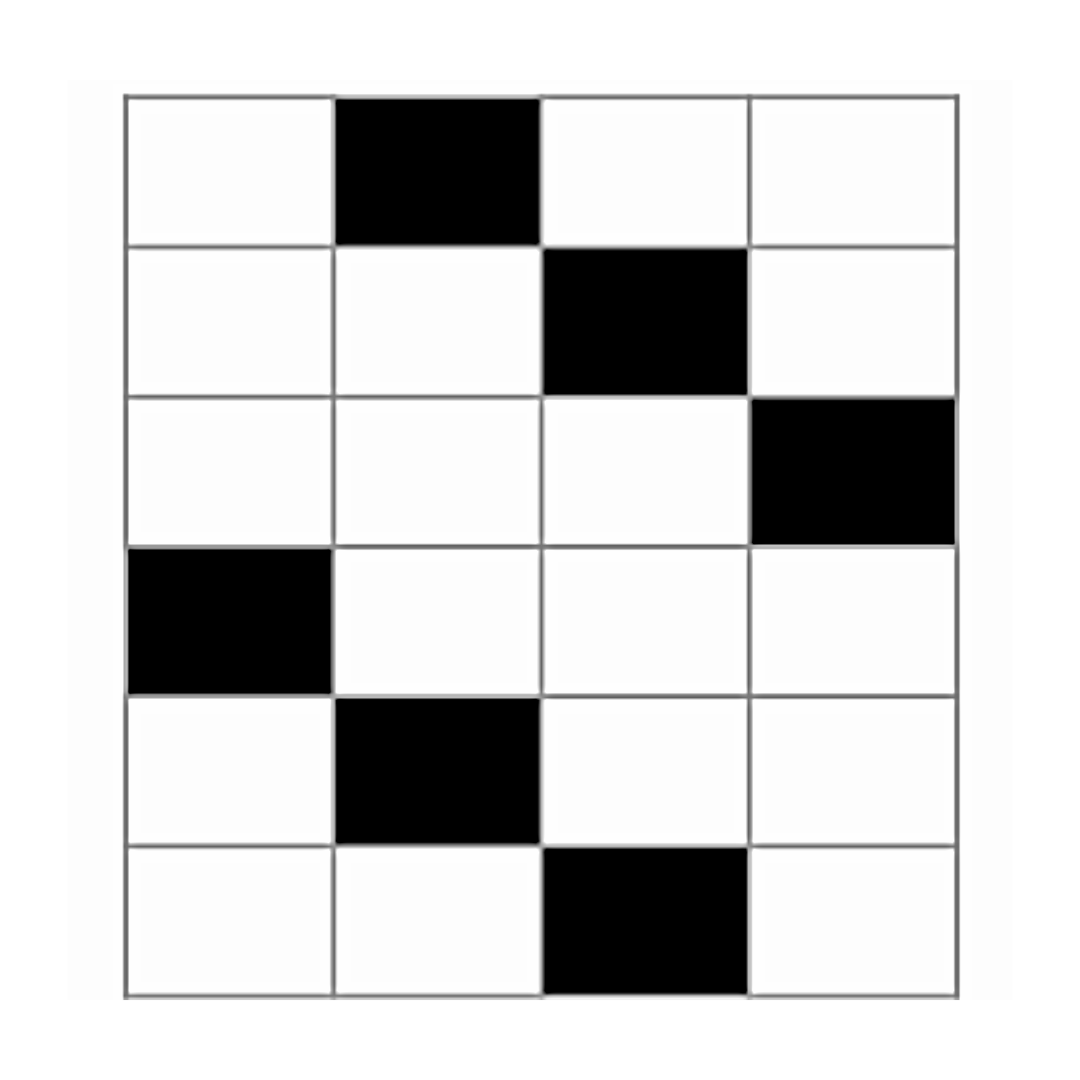 | Weave, 3/1 | An asymmetrical weave ratio where the weft (or warp) yarn skips over 3 threads before passing under the 4th, radically altering the fabric's hand. |
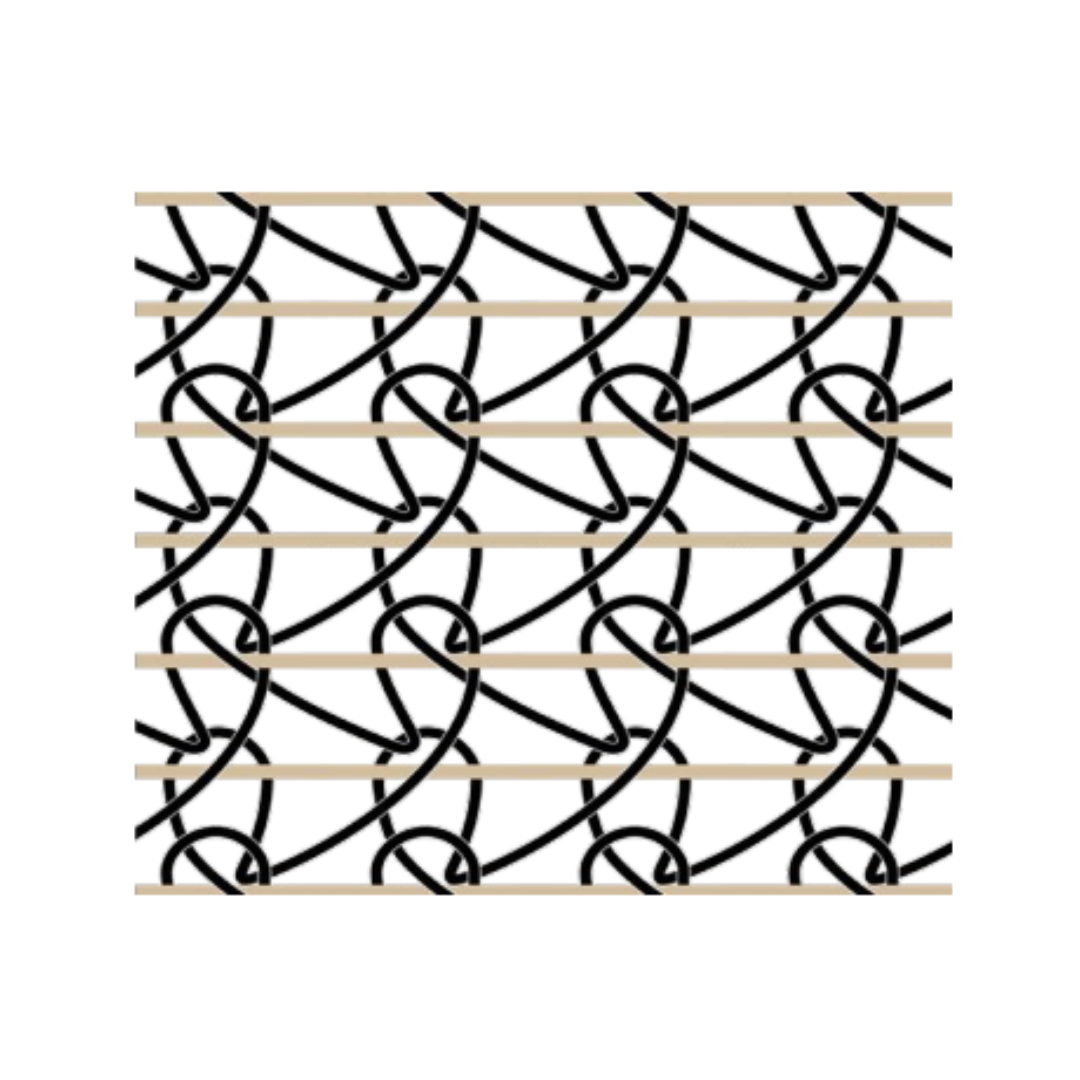 | Weft Insertion | A specific technology that allows inserting a weft thread inside each stitch loop of the knit, which provides elasticity and recovery rather than deformation. |
| Woven | A traditional and robust textile structure made by perpendicularly interlacing warp yarns (vertical) and weft yarns (horizontal). Woven interlinings are highly stable with no elasticity, making them perfect for structured suits and tailored garments. |