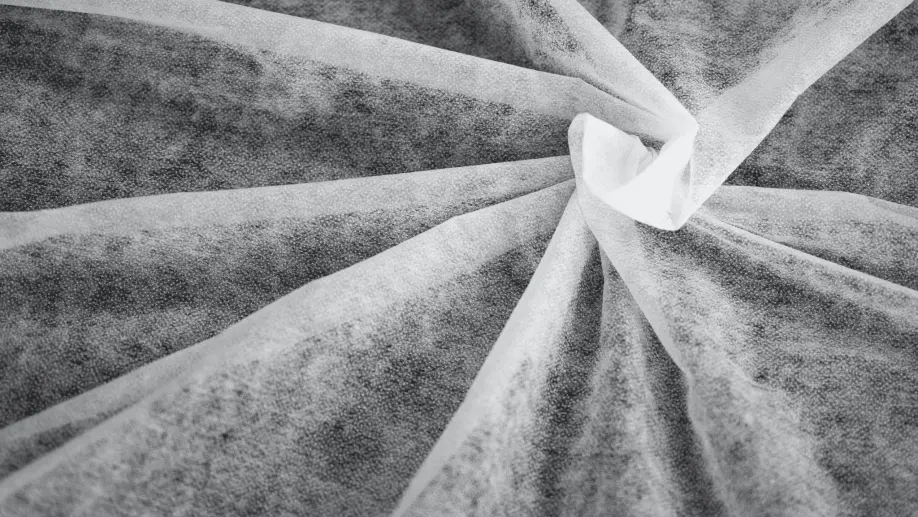
What are the different types of interfacings?
Fusible interfacing vs. sew-in interlining
What is fusible interfacing?
Fusible interfacing is a coated textile heat-bonded between the outer fabric and the lining. It consists of two elements:
- A textile base, which can be woven, knitted, or non-woven.
- A coating, with heat-activatable glue dots that melt with heat to bond the interfacing to the fabric.
Fusible interfacing provides structure without altering the appearance of the fabric.
Why use fusible interfacing?
- To provide shape and structure to garments
- To reduce the number of visible wrinkles
- To make handling easier
- To extend the lifespan of the garment
- To improve appearance
Where to apply fusible interfacing?
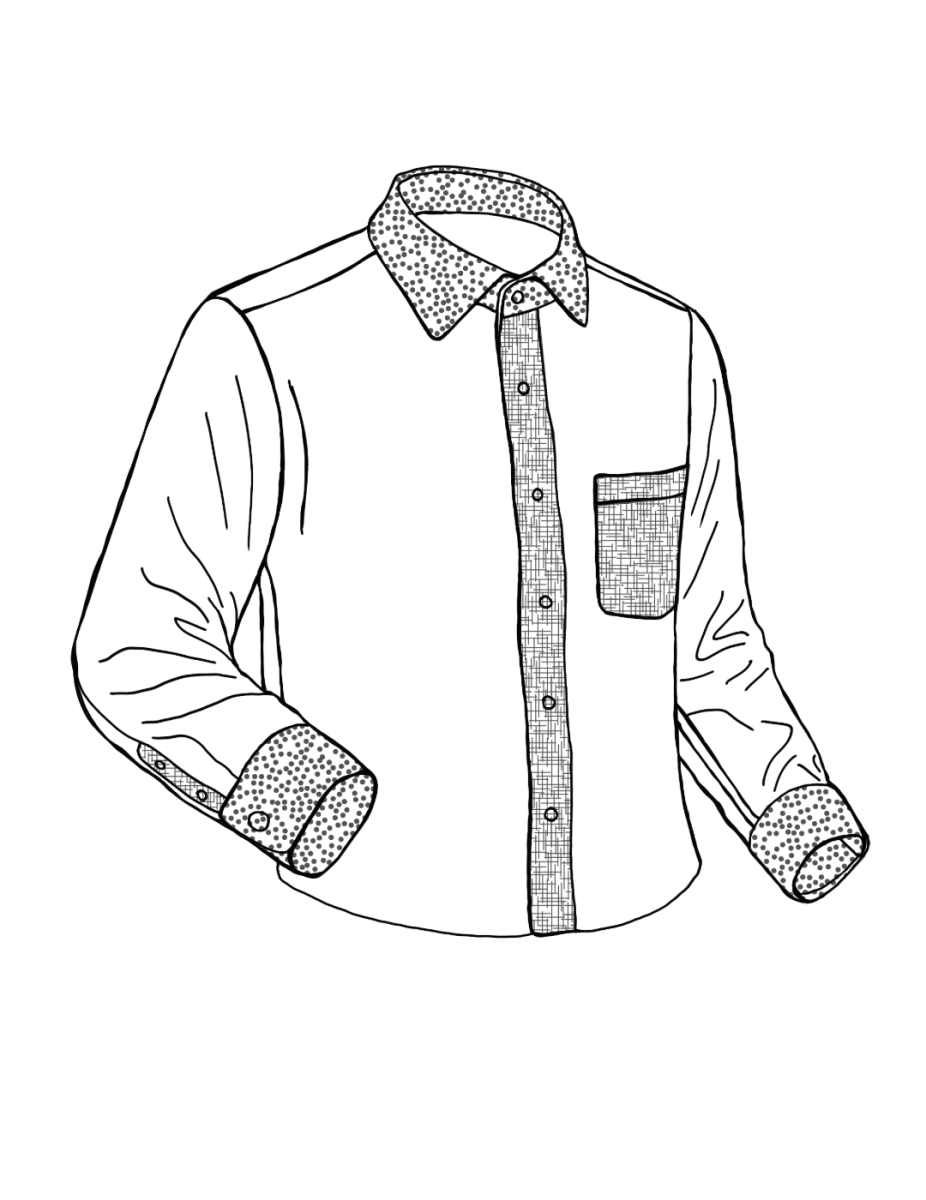
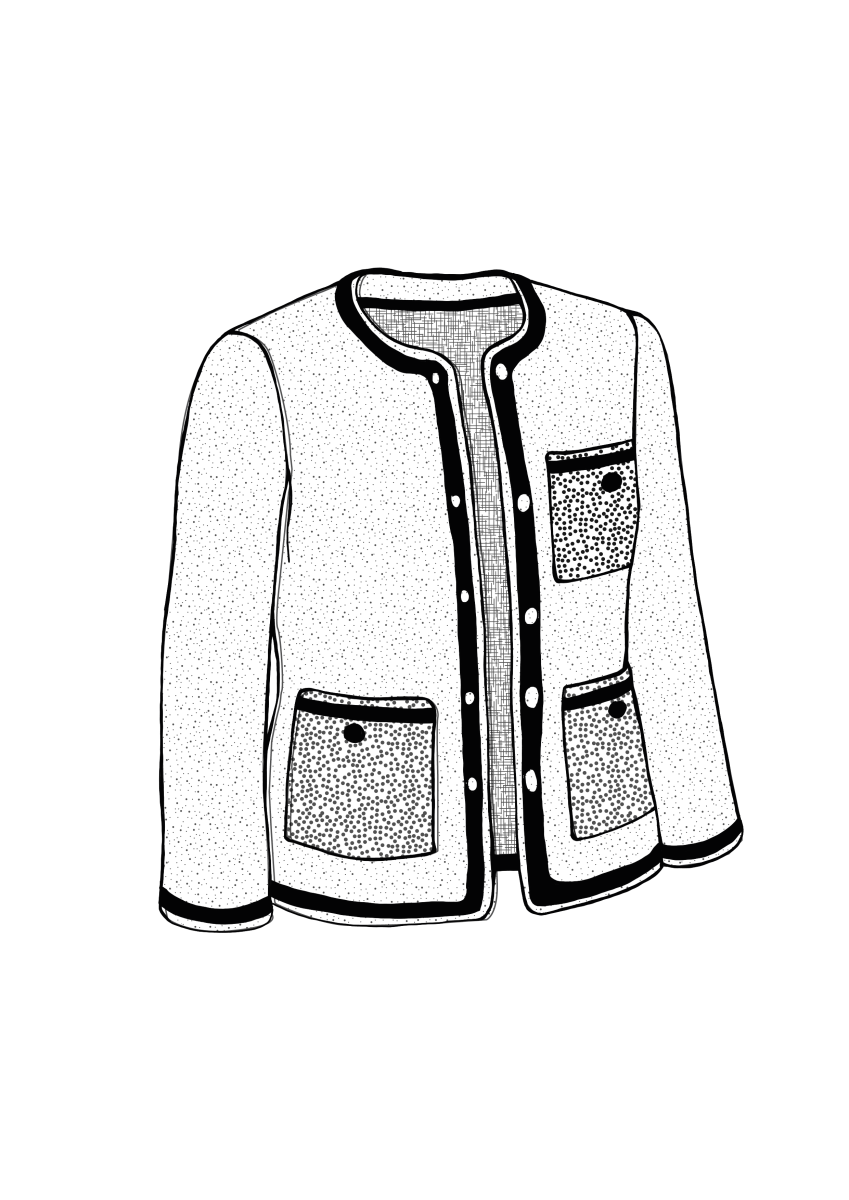
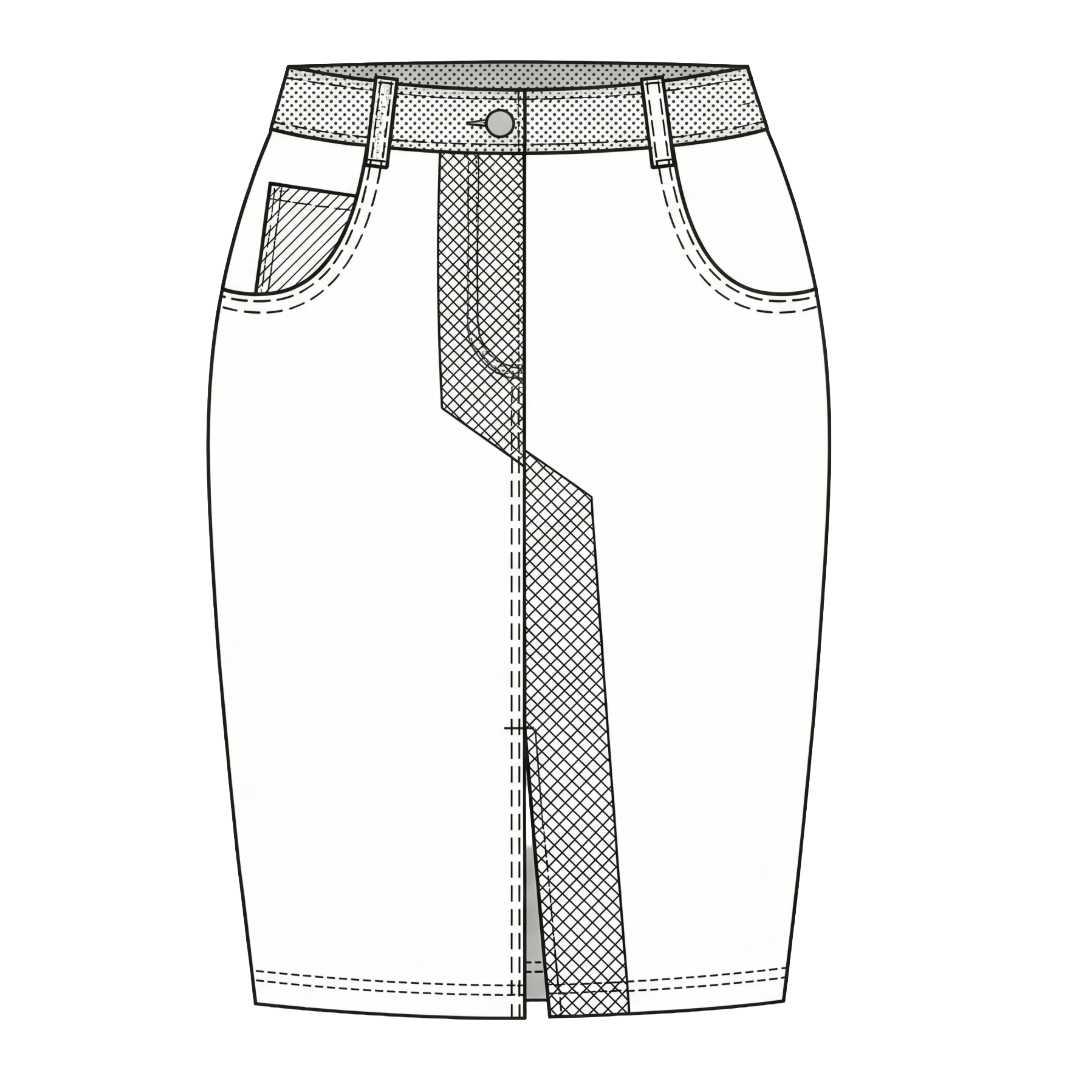
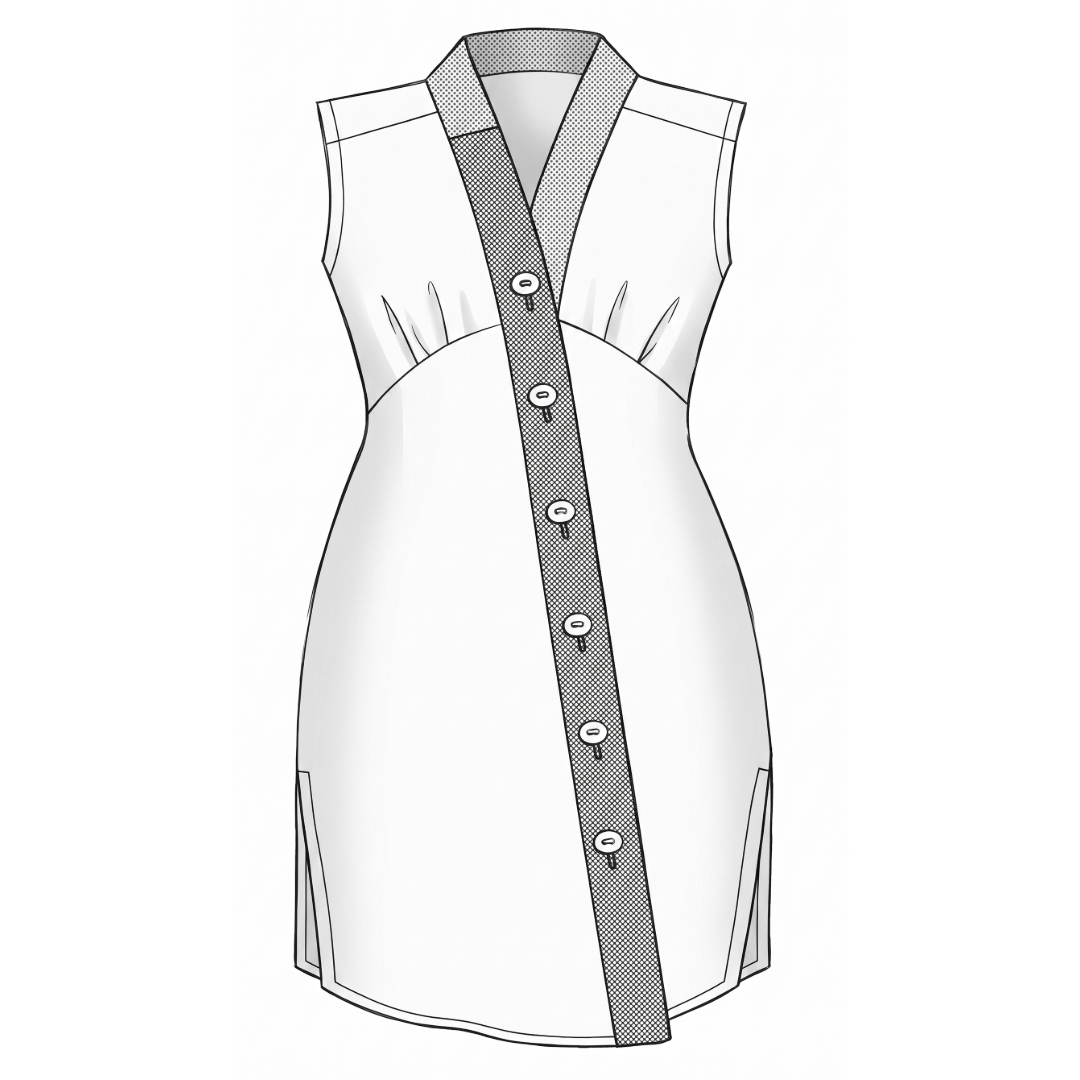
Fusible interfacing is applied to several types of garments, both menswear and womenswear. However, it does not serve the same function in men's clothing as it does in women's. On menswear pieces, it helps provide a square and straight look to give stature. On womenswear pieces, it adds shape without disrupting the feminine silhouette.
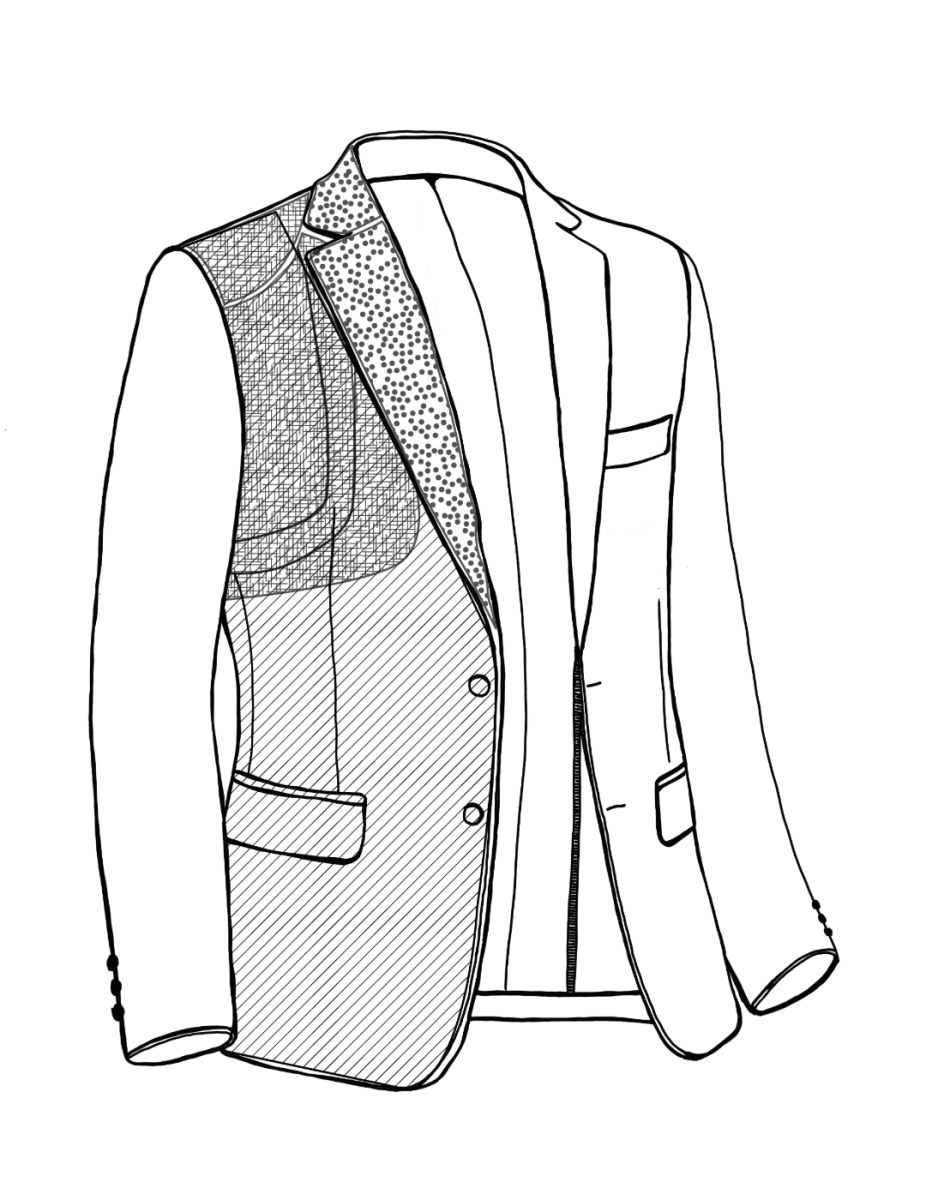
Lapels, pocket flaps, lower front, piping, armholes, sleeve heads, collars, etc.
How to apply fusible interfacing?
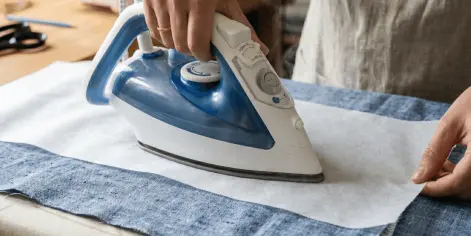
There are several methods for applying fusible interfacing (hand iron, flatbed press, continuous fusing press). Consult our dedicated guide to learn more about the fusing process, machinery, and parameters.
What is sew-in interlining?
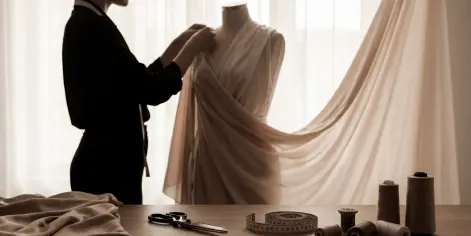
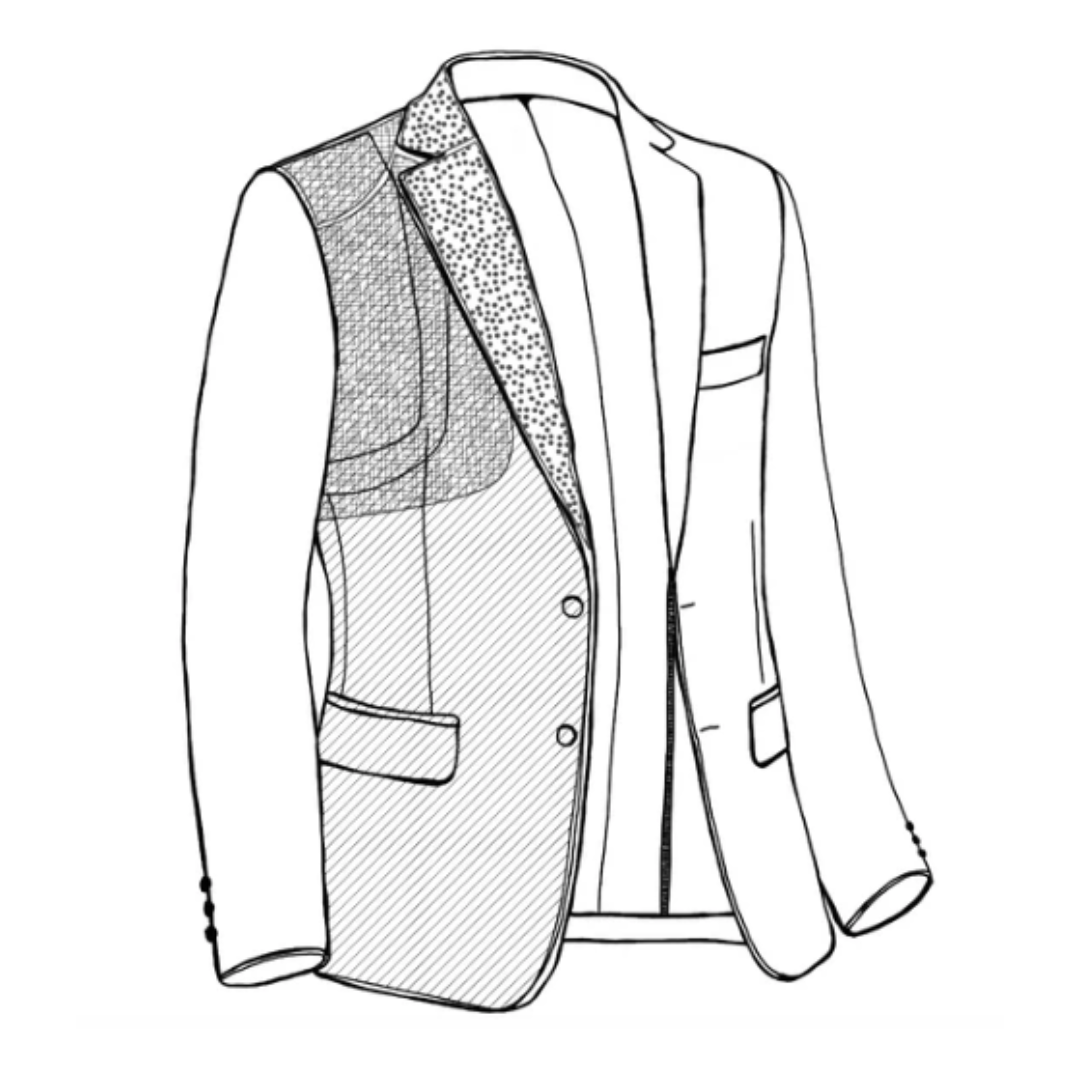
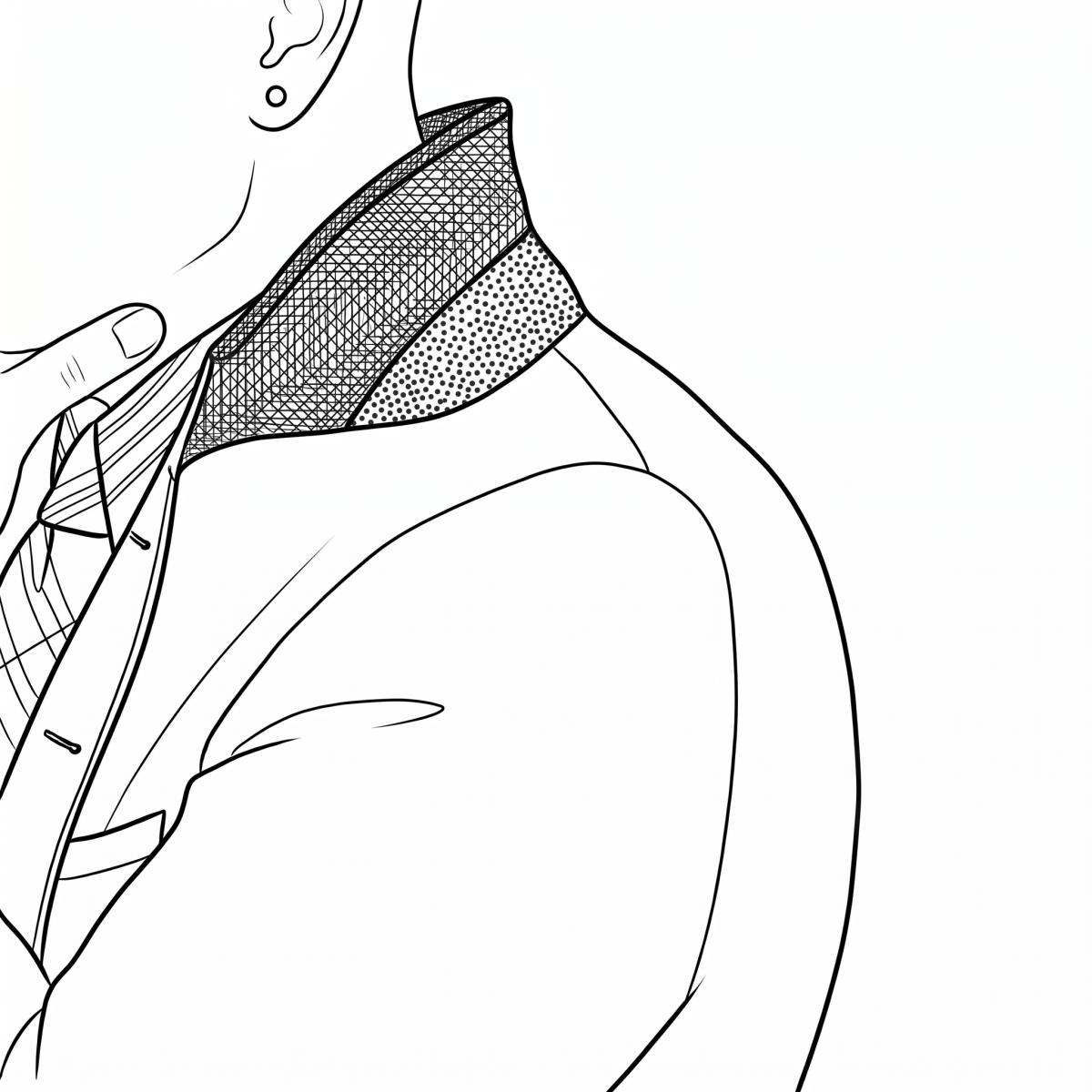
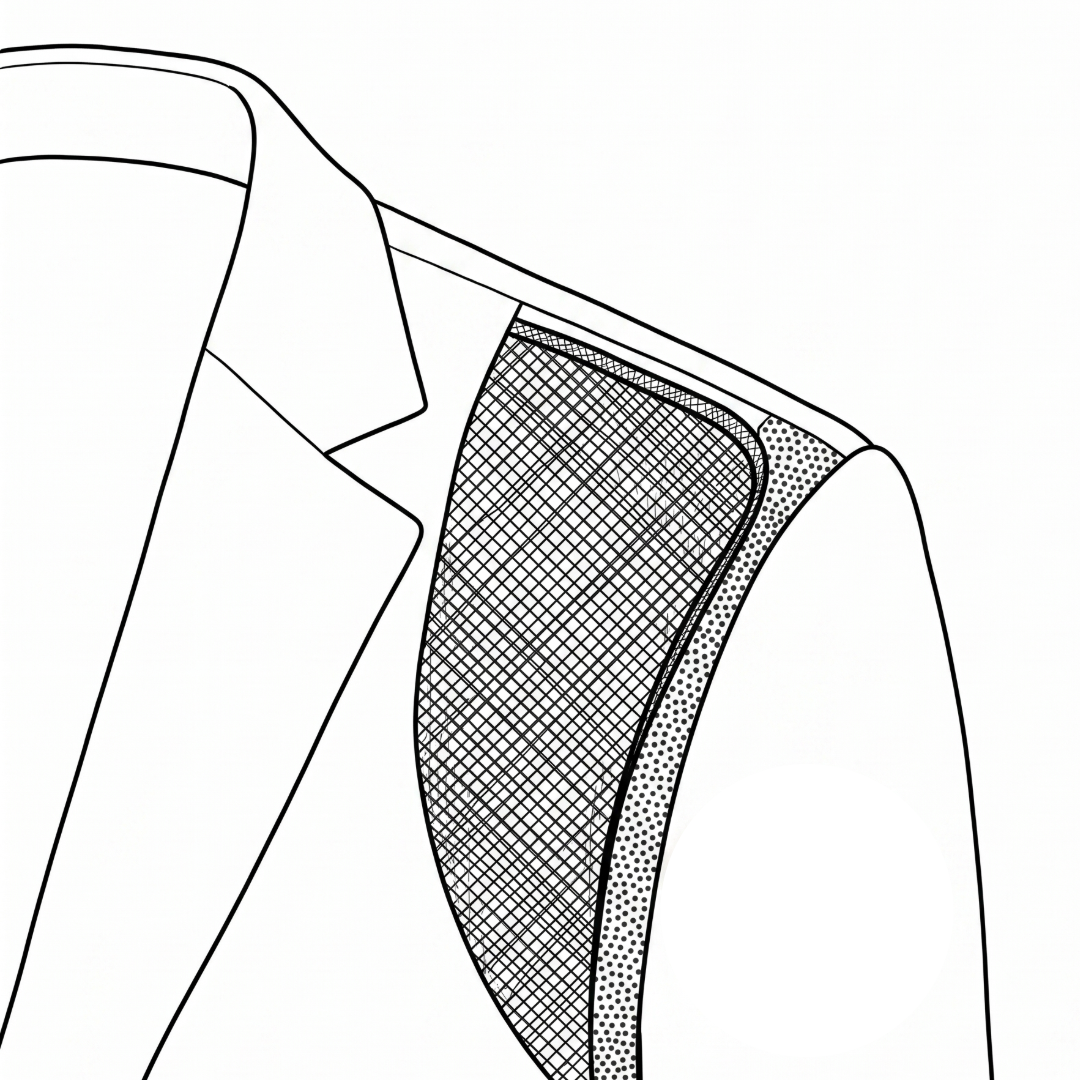
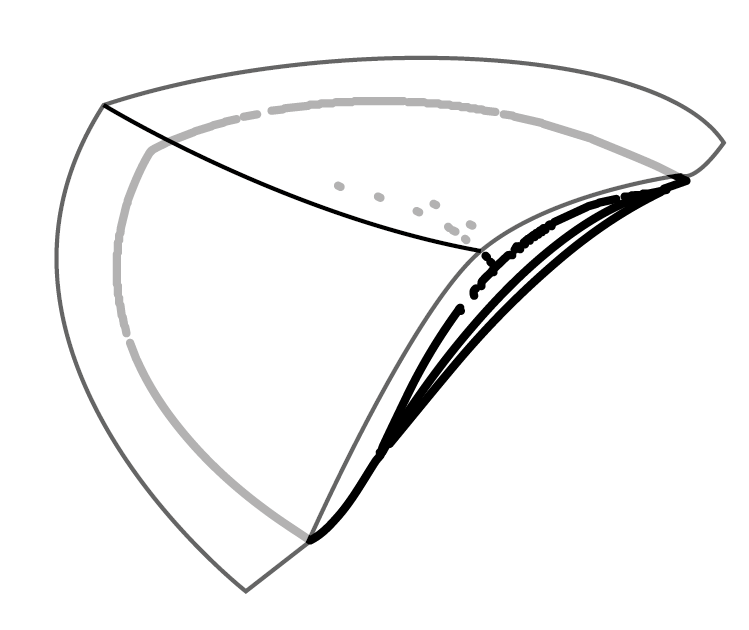
A sew-in interlining is a textile piece inserted between two layers of fabric to reinforce a garment. There are different types of sew-in interlining, such as tailor's canvases, chest pieces, undercollar felts, sleeve heads, shoulder pads, or wadding, to reinforce collars, cuffs, jacket fronts, or to add volume (such as wadding for down jackets).
Why use sew-in interlining?
Just like fusible interfacings, sew-in interlinings allow you to:
- Provide shape and structure to garments
- Reduce the number of visible wrinkles
- Make handling easier
- Extend the lifespan of the garment
- Improve appearance
But more specifically:
- They give stature to jackets
- They give volume to coats/down jackets (wadding)
- They reinforce the fronts of suit jackets (chest pieces)
Where to apply sew-in interlining?
Sew-in interlining is primarily applied in jackets and coats to reinforce various strategic parts of the garment.
.png)
How to apply sew-in interlining?
Sew-in interlining is the perfect solution for delicate fabrics that are sensitive to the heat of an iron. Unlike the fusible version, it is attached without glue: simply pin the interlining to the wrong side of your piece, then sew a stay-stitch within the seam allowance to secure it to the main fabric.
It can be used for fully custom tailoring, for example starting from canvas rolls, or by using premade solutions such as shoulder pads.
Conclusion
Fusible interfacing is the ideal solution for structuring designs without visible stitching, while for fabrics that do not tolerate glue or heat, sew-in interlining remains the best option. More traditional, it offers a flexibility that fusible interfacing cannot match.
Non-woven, woven, or knitted interfacing?
As we saw previously, every interfacing option consists of a base, which can be non-woven, woven, or knitted. But what does that mean?
Non-woven interfacing
Lacking a traditional woven structure, non-woven textiles are created by directly assembling textile fibers. Their cohesion is ensured by chemical or thermal bonding, thus offering an industrial solution that balances technical properties and cost optimization. However, non-woven interfacings often provide little to no elasticity. They tend to be less durable over successive home launderings due to their structure, making them more fragile.
Woven interlining
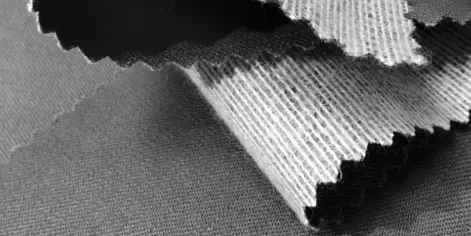
Unlike non-wovens, woven interlinings have an organized structure of warp and weft yarns, crossed on a weaving loom. The plain weave is the simplest form: the weft yarns pass alternately over and under the warp yarns, creating a regular and robust grid.
There are different types of plain weaves:
| Weave Type | Description | |
|---|---|---|
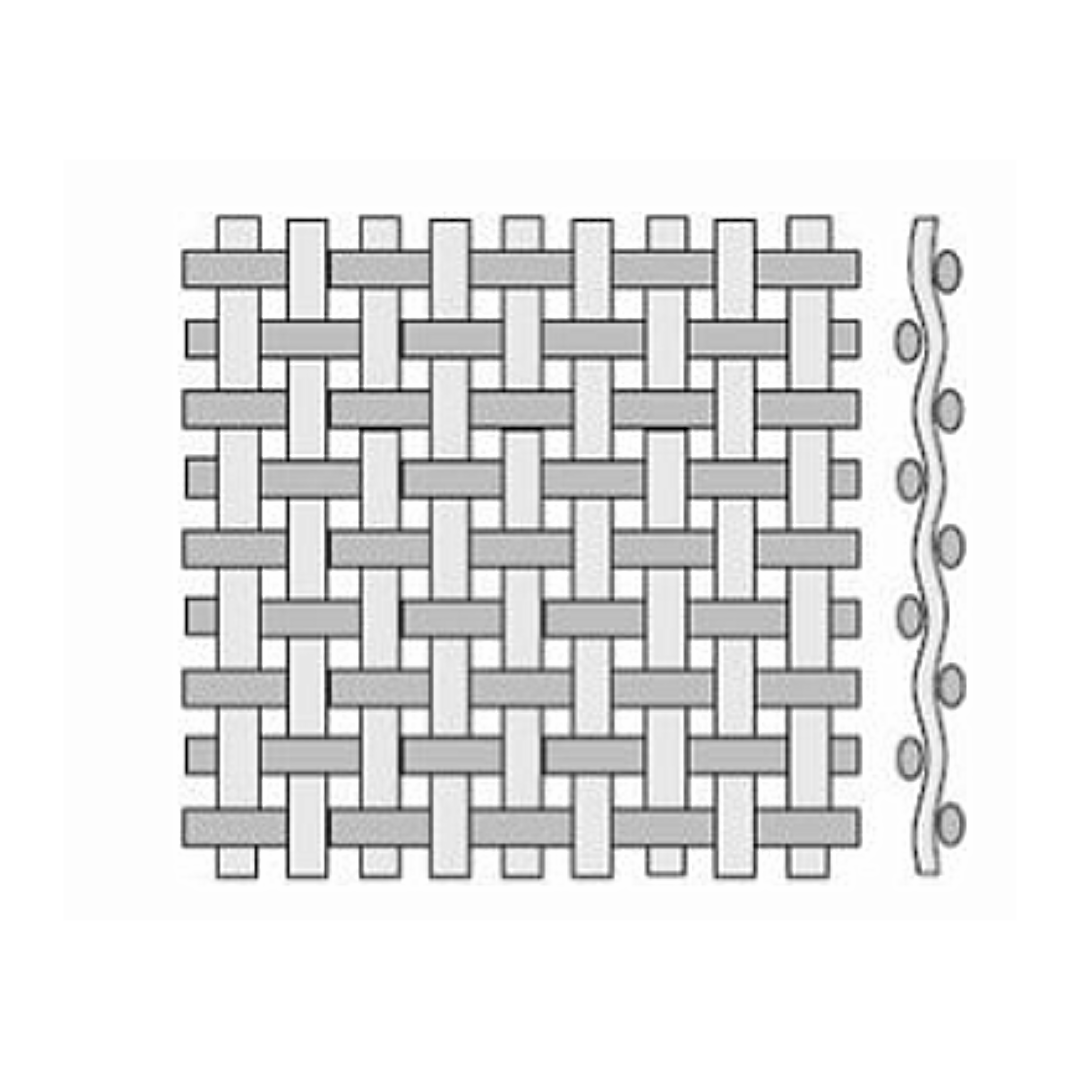 | Plain Weave 1/1 | The warp yarn and the weft yarn pass under each other. Visually, the yarn is only visible when it is on top. |
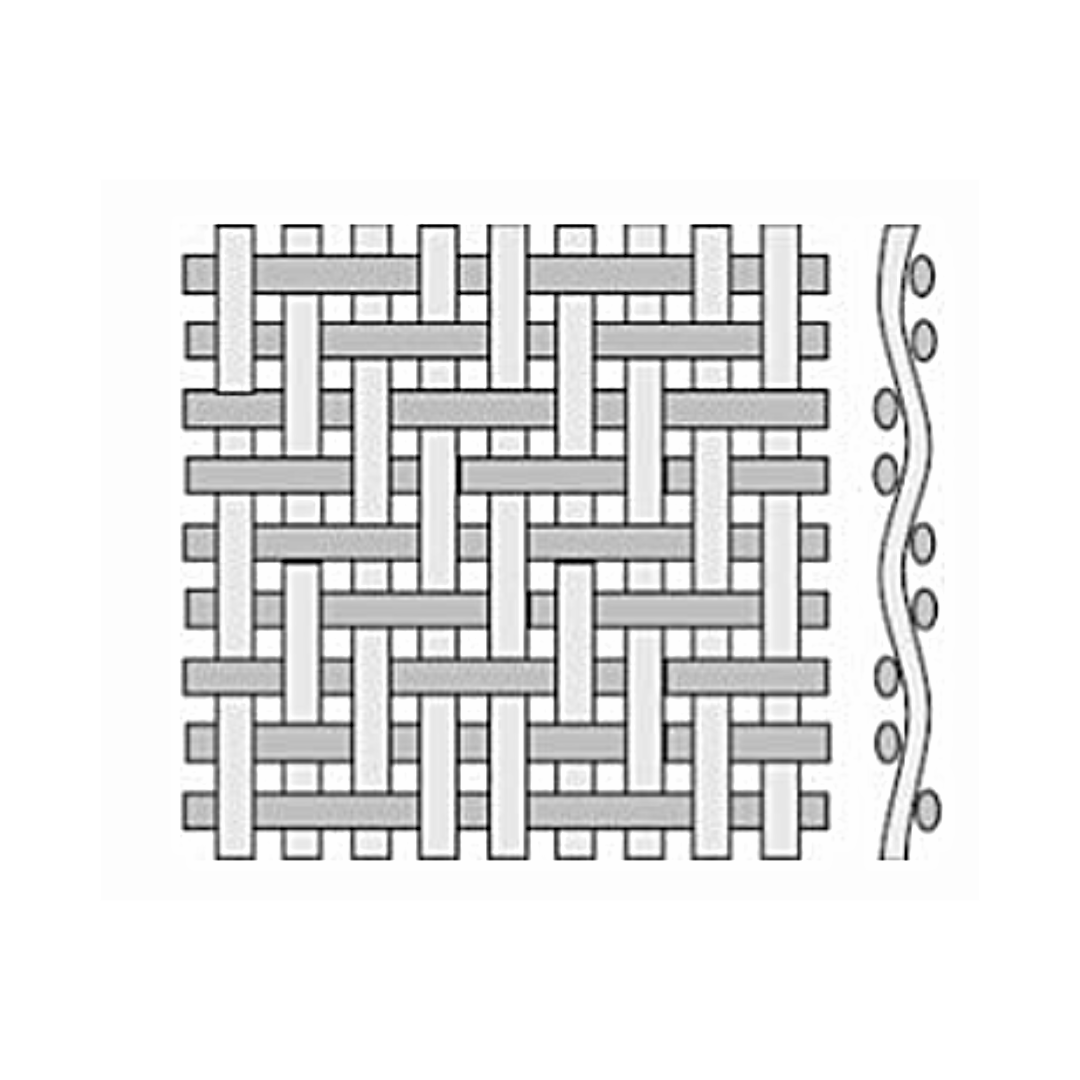 | 2/2 Weave | The yarn passes twice over, then twice under. |
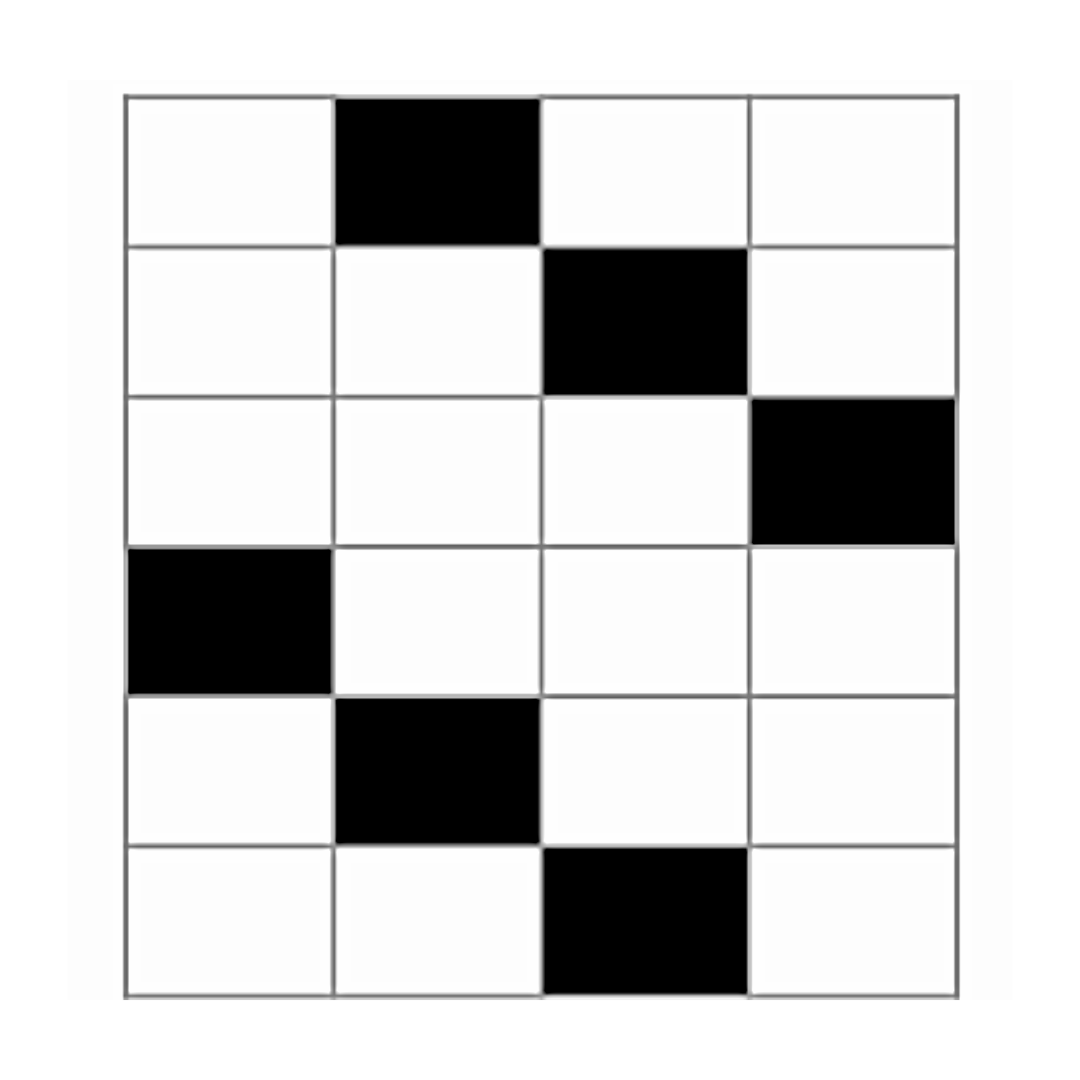 | 3/1 Weave | This asymmetrical ratio radically changes the hand of the fabric. The weft (or warp) yarn skips 3 yarns before passing under the 4th. |
Knitted interfacing (with weft insertion)
Knitted interfacing relies on the interlocking of yarn loops. This specific process gives the textile high extensibility and characteristic flexibility, ideal for following body movements.
Traditional circular knits, while appreciated for their great flexibility, have a major drawback: they are highly deformable, lack directional stability, and tend to stretch out or bag under tension and washing.
Conversely, the weft-insertion knits used by Chargeurs PCC structurally correct this defect. By inserting straight transverse weft yarns into the core of the knit, this hybrid technology combines the natural drape of a knit with the stability of a woven fabric. This results in excellent shape memory and remarkable dimensional stability, guaranteeing garments an impeccable hold and silhouette over time, without any compromise on lightness or comfort.
At Chargeurs PCC, we primarily work with 3 types of knits:
| Knit Type | Description | |
|---|---|---|
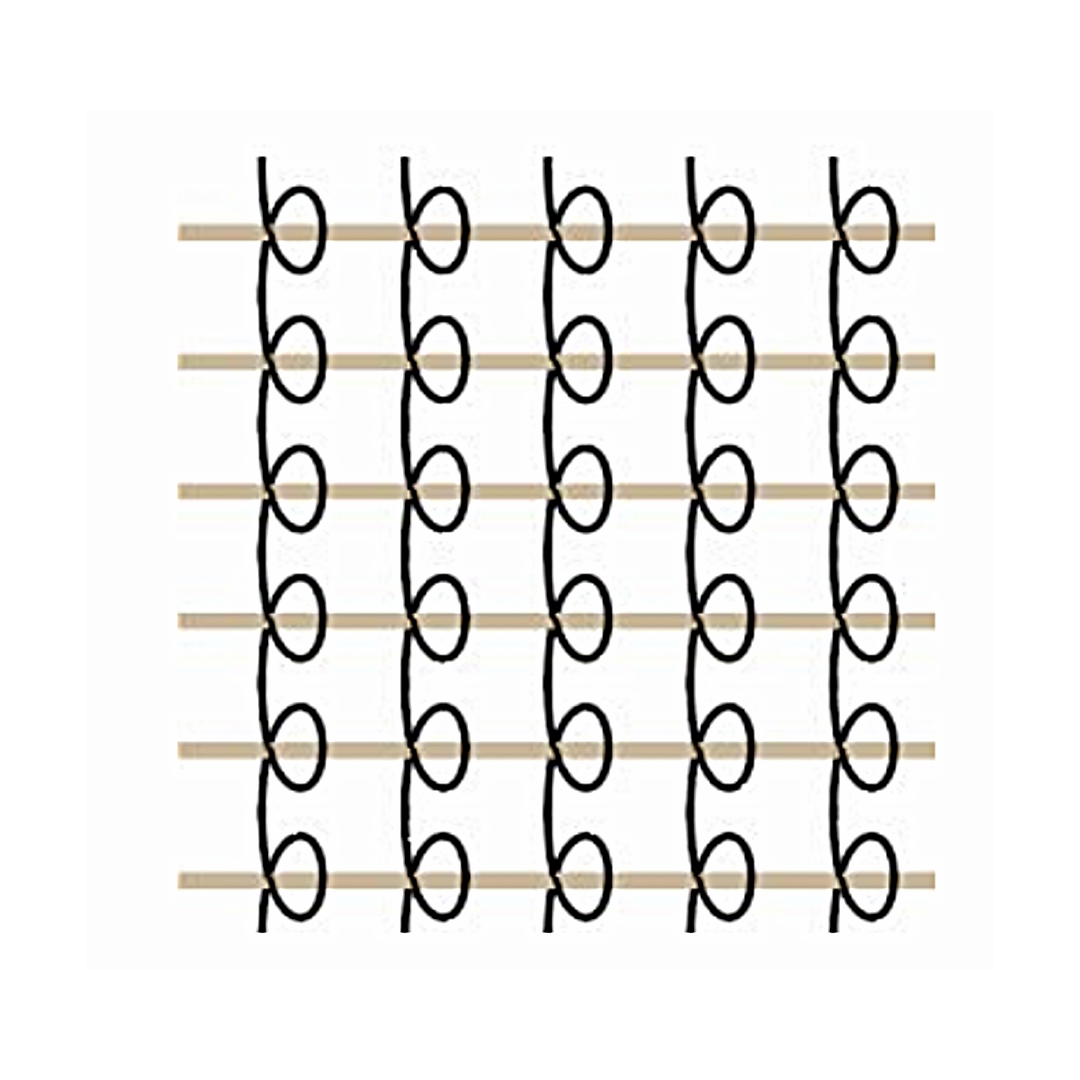 | Chaînette | The warp is worked under tension, masking its usual looped appearance. The focus is on the weft, whose textured yarn creates a denser and more voluminous surface appearance, offering a rich texture to the touch. |
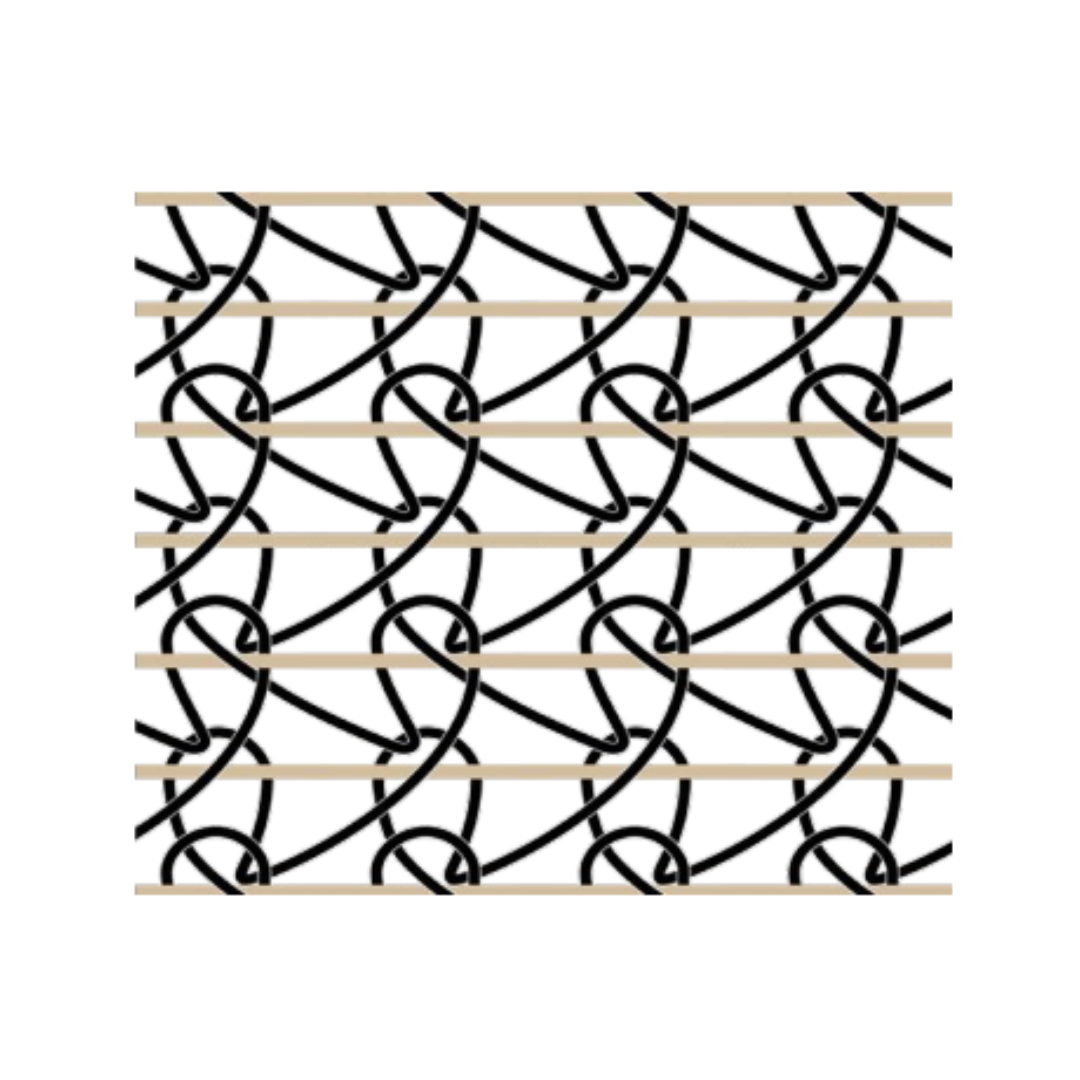 | Weft insertion | The warp goes from left to right and forms diamonds. |
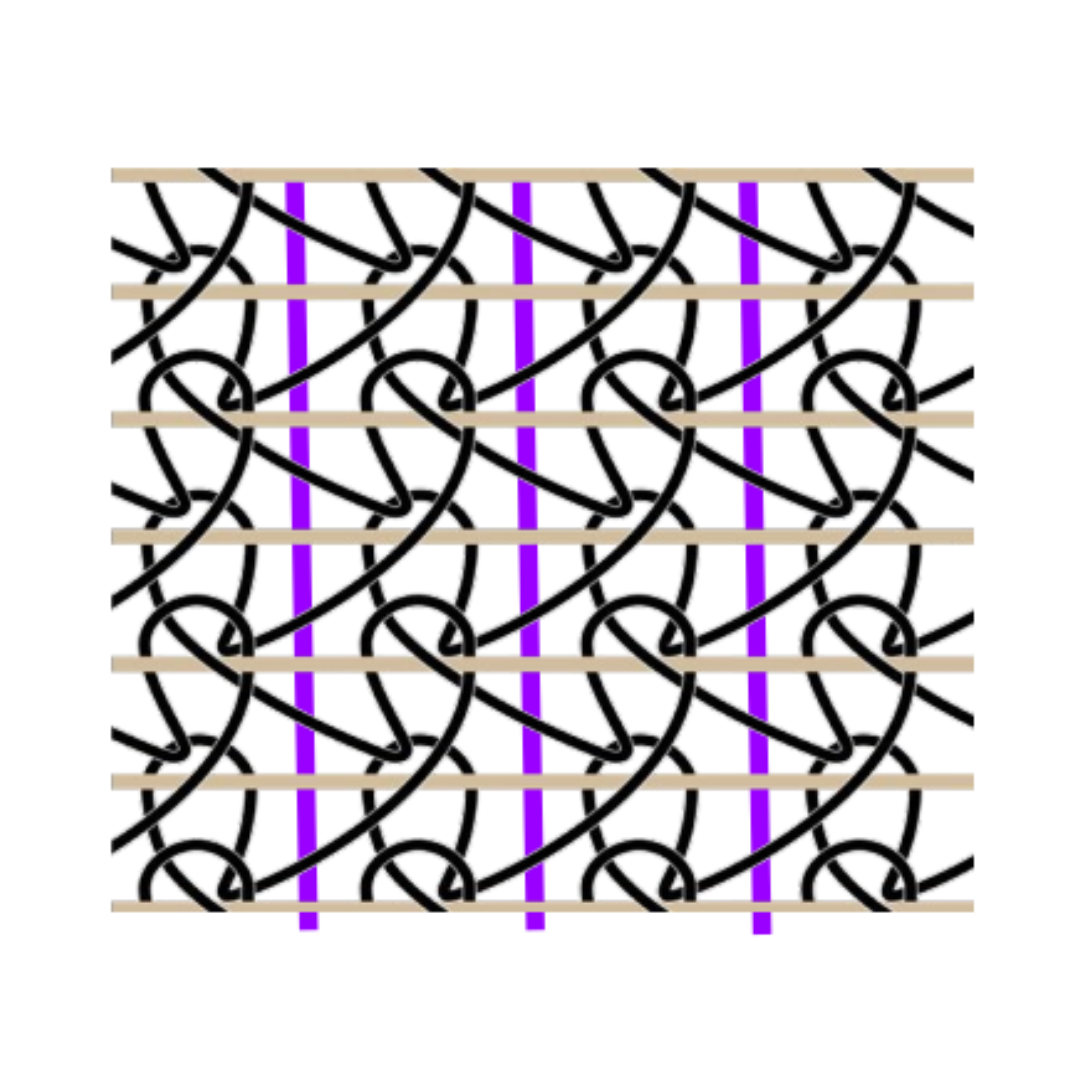 | Top Satin | An extremely dense hybrid structure. In addition to its inserted weft, it integrates an additional non-knitted warp. This more complex construction yields a more "closed" and opaque textile, offering generous volume. |
Non-woven, woven, or knitted interlining: conclusion
| Price/Positioning | Advantages/Disadvantages | |
|---|---|---|
| Non-woven | Economical | Little elasticity but good value for money for mass production / fragile |
| Woven | Mid/High-end | Elasticity is often bidirectional and can, in some cases, be a problem in the warp direction: no fabric support. Suitable for suit jackets. |
| Knitted | High-end | Highly elastic in the weft direction, ensuring comfort. Does not deform, suitable for womenswear to preserve the silhouette. |
As you can see, when it comes to selecting the perfect interfacing or interlining, many options are available to you. It all depends on your needs: the level of rigidity or flexibility, budget, quality, and type of production are all criteria that will determine the right interlining for your design. Do you still have doubts or questions? Contact us or send us a sample request without delay!